

Media
|
Transcripts
April 16, 2026
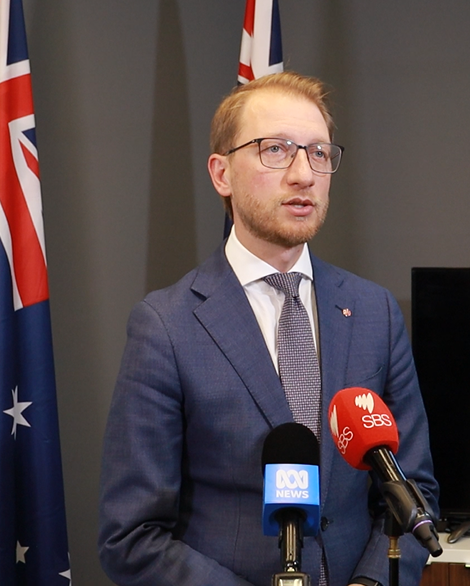
SENATOR JAMES PATERSON: Good afternoon. I'll be responding on behalf of the Opposition to the speech by the Deputy Prime Minister and Defence Minister Richard Marles at the National Press Club today. And I want to start by saying where we agree with the Albanese Government when it comes to defence.
Firstly, it does appear there is some increases in defence spending in the National Defence Strategy and new Integrated Investment Program released by the government today, although exactly how much and where it has come from is not yet clear, which I will come to in a moment.
Secondly, it does appear the government has now belatedly acknowledged that modern warfare has changed four years after Russia's invasion of Ukraine and the war in Iran and that we are now living in an age of missiles and drones. It's clear that even the government recognises Australia is not adequately prepared for that era and that we need to increase our investment in both offensive and defensive capabilities in this space to protect Australians.
Thirdly, it is welcome that the Defence Minister was direct and public about the areas in which we disagree with the People's Republic of China. We should call out their malign behaviour, particularly in the South China Sea, and we should be honest with the Australian people about where we disagree with China, and what that means for our defence and national security, and it's appropriate that he did so today.
But there are some pretty profound areas of disagreement between the Opposition and the Government following the Deputy Prime Minister's speech today.
The first is that the Deputy Prime Minister admitted there are $5 billion of secret cuts as part of the new Integrated Investment Program, but he refused to say where those secret cuts are. The Australian people are entitled to transparency when it comes to defence and national security, and we need to know what other new capability has the Albanese Government cut after their previous cuts to capability, including infantry fighting vehicles, self-propelled howitzers, Hunter-class frigates, F-35s, even military technology satellites, and even reservist days. Australians deserve to know what these cuts are, and just hiding behind commercial confidentiality is not acceptable.
Secondly, the Albanese government is using an entirely new measure of Australia's defence spending as a proportion of GDP. Accounting tricks do not make our country safer, and changing the rules about how we measure defence spending is pulling the wool over the eyes of the Australian people, not being upfront and honest with them about exactly how much we are spending. We have not previously counted things like military pensions towards our defence expenditure, and if we're now going to do so, the government should be utterly transparent about how that has changed the figures, and the Deputy Prime Minister failed to do so today.
Just finally, and this is a minor but important point, I frankly thought it was beneath the Deputy Prime Minister to use a National Press Club address launching a new national defence strategy to attack veterans and those who've served our country. He had a spray at former generals and former defence department officials for their criticism of his government on defence and national security. We want to have a robust and open public debate about defence and national security, and experts like that should be encouraged to contribute their expertise to the public debate. They shouldn't be publicly and personally attacked by no less than the Deputy Prime Minister at the National Press Club.
JOURNALIST: Can I just ask you, we had the Defence Minister say very clearly that he thinks that he's using the metric that the United States is using to come up with that 3% figure, is that really fair enough, what is sort of wrong about using that figure?
SENATOR JAMES PATERSON: Well, accounting tricks don't make Australians safer, and what we actually need is a real increase in defence spending on defence capability, and we need it today. Counting spending that we didn't use to count, like military pensions, doesn't increase the defence budget. It just increases the headline number, and Richard Marles might feel good about that, but it doesn't make our country safer. This is a really significant change. Australian governments have not measured defence spending like this before, and if we're going to have such a significant change, the bare minimum required is transparency. How much of the increase in defence spending claimed by the government is coming from accounting tricks, and how much of it is actually new money going on new capability?
JOURNALIST: Are you reassured by the commentary provided by the Defence Minister on Australia's commitment to AUKUS? And given the fact that there is within the Australian community a diversity of opinion about whether it's the right place to put our money. Do you have concerns that these will now become more contested and potentially end up being something that the government walks away from?
SENATOR JAMES PATERSON: The opposition strongly supports AUKUS, and we provide bipartisan support for the government to deliver AUKUS. Our concern is that the government has tried to deliver AUKUS without sufficiently increasing defence spending. They've held defence spending at 2% of GDP in normal measures, and yet they've tried to deliver a really expensive future AUKUS capability from that budget. And that has meant really severe cuts to the rest of the ADF, particularly the Army, on things like infantry fighting vehicles, self-propelled howitzers, F-35s, hunter-class frigates, military satellites, even reservist days, and that risks undermining support for AUKUS. If people think AUKUS is cutting real capability, that will undermine their support for AUKUS. So the only thing to do is follow the expert advice of Sir Angus Houston and Professor Peter Dean, who completed the defence strategic review for the Albanese government and increased real defence spending today on real capability.
JOURNALIST: Just finally, when the Prime Minister sat in the room with President Trump in Washington. President Trump said that Australia needed to only spend what it could really on defence. He wasn't repeating that particular figure of expectation on Australia. But do you think there was pressure behind the scenes to reach this 3% threshold? Do you think Australia was kind of let off the hook about having to reach this number?
SENATOR JAMES PATERSON: I think we should increase defence spending because it's in our national interest and because our best informed experts say we need to in order to protect our country. We shouldn't increase defence spending because any American administration, including the Trump administration, has told us to. And we certainly shouldn't just pretend to increase our defence budget by changing how we count the defence budget and include things like military pensions, which we've never previously included. So the answer is, act in Australia's best national interest, spend what we need to spend to protect ourselves and follow the advice of people like Sir Angus Houston and Professor Peter Dean, who know more about this than anyone else and have called on us to spend 3% of GDP in real terms, not using accounting tricks.
ENDS