

Media
|
Transcripts
March 2, 2026
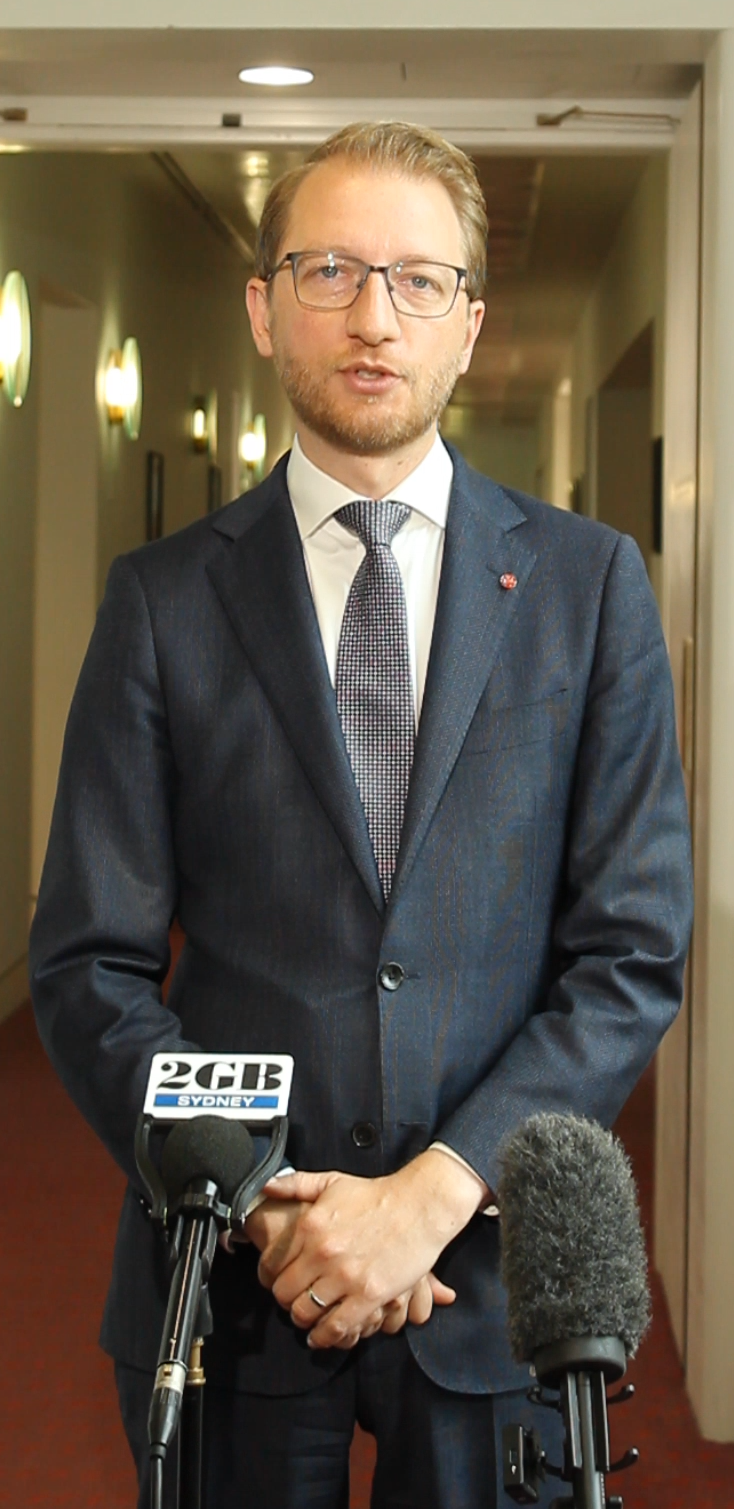
JOURNALIST: Do you agree with the government coming out in support of Israel and the U.S. action?
SENATOR JAMES PATERSON: We strongly support the United States-Israel joint action against Iran. If all this mission achieves is further degradation of the nuclear and ballistic missile capabilities of the Iranian regime, then that will be a very good thing. But we also think it is a good thing that the Ayatollah Khamenei and many of his senior officials have been wiped off the map. Let's never forget that, in addition to the shocking persecution of the people of Iran on their watch, the destabilisation of the Middle East through terror proxies, that they are also responsible, according to our intelligence agencies, for at least two acts of state sponsored terror on Australian soil. So I think it is a good thing for Iran, a good thing for the Middle East, and a good thing for the world that these regime officials have been removed, and we hope for better days ahead for the Iranian people.
JOURNALIST: Do you think Australia can do more to help the U.S.?
SENATOR JAMES PATERSON: I've not yet been briefed by the government, though they have agreed to provide a briefing to the Opposition. And I am not aware of any formal request from the United States or Israel to assist directly in these operations. If those requests come, we should consider them carefully, consistent with our relationship with the United States and our alliance, as to whether we are required to assist or whether we're able to assist.
JOURNALIST: Were you surprised at all that Australia wasn't given a forewarning, and subsequently, given what you just said as well about potential European nations who are now promising to take their involvement, again, what kind of role would Australia play?
SENATOR JAMES PATERSON: No, look, I'm not surprised that there wasn't official forewarning, this is obviously an operation which is most directly in the interest of Israel and the United States, and directly within the capabilities of Israel and the United States to undertake. But I have to say in the public domain I think it's been clear for days if not weeks that the United States and Israel were likely to take some sort of action like this. I think what we've learned from President Trump is that when he moves multiple carrier strike groups into a region, he does so because he intends to use them. If we didn't learn that from Venezuela, we certainly learnt that again in Iran.
JOURNALIST: The situation in the Middle East is expected to see petrol prices rise, potentially inflation in Australia. How do you think the federal government should be navigating this?
SENATOR JAMES PATERSON: Well, President Trump has been clear that one of the primary targets of the U.S. in this operation is the Iranian Navy, and the purpose of that is to prevent them from closing the Strait of Hormuz. Even with the damage done, though, to both the naval vessels that President Trump has disclosed and their naval headquarters, it is still possible for the Iranians to seriously disrupt and interdict oil flowing through the Strait of Hormuz, and that will have flow-on consequences for us. Even if there is no direct interruption of that oil supply, we know that heightened events like this in the Middle East do increase oil prices, and that will have consequences for Australians. That's one of the reasons why Australia needs to always be very mindful about the stocks of oil supplies that we have on hand, particularly that we have in our country. I think many people, many analysts would say that for years, that's not been adequate, and it's something that needs to be addressed.
JOURNALIST: Senator, would you be happy for the Liberal Party to preference One Nation on its how to vote cards?
SENATOR JAMES PATERSON: That's a matter for the party organisation. We will go through those processes in the normal time and the normal way. We will have a Farrer byelection, we will have to make a decision about that in the coming months, but the next election is roughly two years away, so there's plenty of time before we have to make those decisions.
JOURNALIST: James, when Saddam was toppled, ISIS emerged from the chaos. I mean, even when the Shah was overthrown, this regime emerged from it. It might be a good thing that the regime is gone, but are you at all concerned about a civil war in Iran and what would fill that vacuum?
SENATOR JAMES PATERSON: Certainly, it's always wise to be cautious with events like this. You are right that there can be unpredictable and unintended consequences from military action like this. Nonetheless, I still think it is a good thing given the malignant nature of the Iranian regime, that at least its top officials have been removed from power from it.
JOURNALIST: Should the government be actively trying to get Australians out who are in the region?
SENATOR JAMES PATERSON: Yes, the Australian government should be doing everything they can to assist Australians to leave the region. If it is not possible for commercial flights to evacuate Australians, in the past, we have used military assets to travel to the region to evacuate Australians, and if the government chooses to go down that path, if that's necessary, they will have our unqualified bipartisan support. I'm not sure there were sufficient warnings for Australians in the region in the recent days and weeks. Given the likelihood of military action, I think many Australians have been caught by surprise and might have chosen to leave had they been warned to do so earlier.
JOURNALIST: Senator Paterson, if I could ask just on the Liberal Party review, there's concern, you know, the suppression will stop what could be a more open debate about what went wrong for the party. Do you have concerns about that? Would you prefer it be out there in the open?
SENATOR JAMES PATERSON: I'm not sure we could have had a more open debate about the future of the Liberal Party over the last nine months than we've already had. I don't think that whether the review is released or not will stop any of my colleagues, or indeed any commentators, from sharing their opinions freely on that, as they have been doing for the last 9 months.
JOURNALIST: Were you surprised it was suppressed?
SENATOR JAMES PATERSON: I haven't read the review, so I'm not in a strong position to comment on it. Sometimes reviews are released, sometimes they are not released. It depends on the circumstances of the review.
JOURNALIST: Senator, back to Cam's question, John Howard said that One Nation needs to be preferenced last. Does the party need to heed his warning?
SENATOR JAMES PATERSON: I'm not sure that's right. I think some people talk about the historical precedent in 2001 where the Howard government preferenced One Nation last. I actually think in more recent times John Howard has said he's supportive of preferencing One Nation more highly. That's a decision to be made by the party organisation closer to we have to make that decision.
JOURNALIST: Andrew Hastie says he'd be happy for that to happen, so you're not ruling it out, are you? You'd be comfortable if that's the decision the party makes?
SENATOR JAMES PATERSON: Not ruling anything in or out in relation to preferences because I'm a Member of Parliament, it's not my role to decide preferences for the organisational wing.
JOURNALIST: James, Mark Carney is about to come to Australia. Do you agree with him that the international rules-based order is over? And your colleague Andrew Hastie has said the world is ruled by might is right.
SENATOR JAMES PATERSON: Look, I think it is important that we be sober and realistic about the world we live in. We shouldn't have fantasies about the world that we might have been in. I think there certainly was a unipolar moment post the fall of the Soviet Union at the end of the Cold War where the United States military force undergirded what was essentially a rules based order. But we're living in a much more multipolar or bipolar world now. We have rising powers like the People's Republic of China, who will not feel bound by conventions of the United Nations or international law and they have demonstrated that over and over again in the South China Sea and elsewhere. And I think we do have to be realistic about that. What does it require of Australia in return? What do we need to invest in our own military capability to protect our interests and our values? We have to be able to deter potentially much larger adversaries from threatening our interests and values, and in a world where the international norms are breaking down, it's critical we step up.
Thanks very much everyone.
ENDS