

Media
|
Transcripts
December 13, 2025
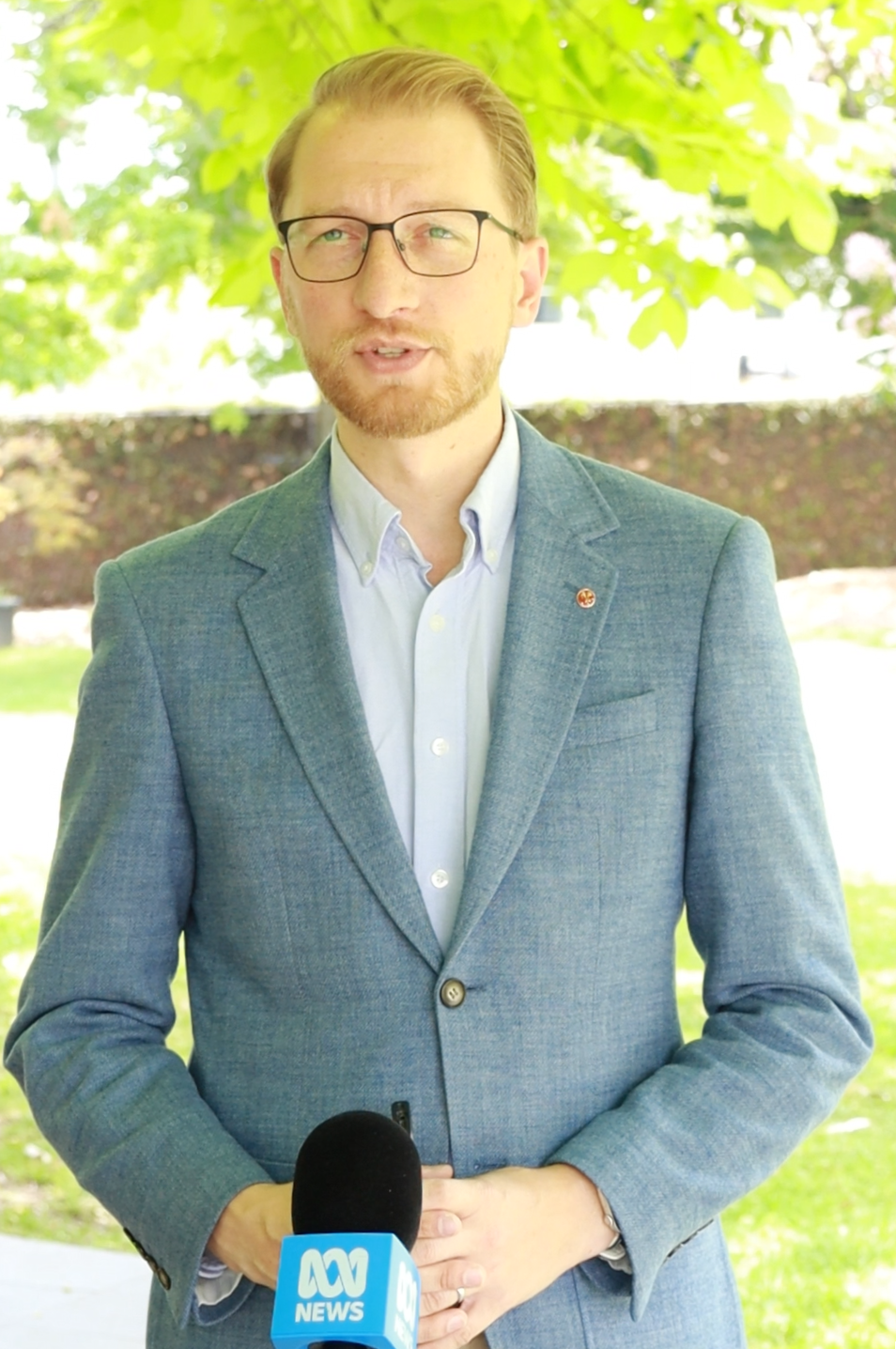
SENATOR JAMES PATERSON: Good afternoon, everyone. Well, it is deeply, deeply disappointing news to learn today that the Prime Minister has refused the offer of bipartisan support from the opposition leader, Sussan Ley, to restore trust and confidence in the parliamentary business resources framework, which has been so badly undermined, in fact, smashed by the behaviour of Albanese government ministers, especially Anika Wells. This was an opportunity for the Prime Minister to step up to fix a problem, to take responsibility, just as he promised he would do when he was opposition leader. In fact, he frequently promised that he would show up, that he would take responsibility, and he would fix problems when they arose. There's a reason why so many journalists and commentators are calling this his 'I don't hold a hose moment.' Because when he tried to pretend that simply because he wasn't the Finance Minister, he couldn't do anything about it, we all knew he was being disingenuous and making excuses instead of taking responsibility.
The Prime Minister still has that offer of support from the opposition. We're happy to work with him in a sensible bipartisan way to make necessary changes to restore public confidence, which has clearly been undermined in this system. And if the Prime Minister continues to refuse to do so, it will reflect very poorly on him. The truth is that the front page of the Daily Telegraph today blew apart any excuses the Prime Minister might have had about how it was difficult to make changes to this framework. Because that front page story demonstrated that when it's convenient for the Prime Minister, when it suits his political interests, he's very happy for his government to make changes to the Parliamentary Businesses Resource Framework, just as they did in the lead up to the last election, to make it easier for him and his ministers and his staff, and yes, the opposition as well, to make claims under the regime. So if he can make changes like that when it suits him, he can make changes now too. And if he refuses to do so, it's because he doesn't want to. Happy to take questions.
JOURNALIST: Amanda Copp from Nine News here. So with those revelations that Don Farrell has made these changes, particularly after the Prime Minister said on multiple occasions that the rules had been set previously, that any rule changes were done at arm's length. Do you think he has misled people here about the kind of influence the government can have on these kinds of expense rules?
SENATOR JAMES PATERSON: Yes, the Prime Minister lied when he said that it was difficult or at arm's length to change these rules. His government has changed these rules by regulation multiple times. His own Special Minister of State, Don Farrell, did it, no doubt at his direction, when it was politically convenient for the government to do so. So there's nothing stopping the Prime Minister from changing it now. He is not some powerless bystander. He's not some commentator with no ability to do anything about this. He's the Prime Minister of Australia, and these things can be changed by regulation. They don't even require legislation or the parliament to sit. So if he's not fixing it, if he's waiting for advice, it's because he doesn't want to fix it, and therefore I think he has to take responsibility for every cent of expenditure from his ministers under this regime.
JOURNALIST: What changes do you think should be made to the rules?
SENATOR JAMES PATERSON: Look, I don't want to publicly speculate about what those changes are, except to say that I think there are some reasonable aspects of this scheme which most parliamentarians have used in a sensible and reasonable way, but there are some things which clearly don't meet reasonable community expectations either. I don't think it is within community expectations to take your family on a publicly funded ski holiday. And most parliamentarians haven't used the system like this, and that's a very obvious abuse of the system and the rules by Anika Wells that the Prime Minister could easily prevent by changing the rules.
JOURNALIST: Romy Stephens here from the ABC. Senator, would you like to see other politicians who have been identified in media reporting, such as Don Farrell, Andrew Wilcox and Sarah Hanson-Young, refer themselves to IPEA as well?
SENATOR JAMES PATERSON: Look, that's a matter for any individual parliamentarian to contemplate. If they think there's any risk at all that their expenditure has either been outside the letter or the spirit of the rules, then they should take up the opportunity to refer themselves to IPEA. But I do think, and I have to say, I think Anika Wells' spending really is in a league of its own. It really is so much different to that of other parliamentarians. No one else that I'm aware of has spent $100,000 on return flights to New York City. No one else I'm aware of has spent nearly $2,000 on a meal at a Michelin star restaurant in Paris. No one else that I'm aware of is taking publicly funded holidays to Thredbo. And no one else I'm aware of is happy to keep Comcar drivers waiting for up to ten hours while she sat in a corporate box sipping free champagne. She really is in her own league when it comes to abusing the system. That's why I think it is appropriate that she has been referred to IPEA, but I don't think that's where it should end. She really should be examined under the Ministerial Code of Conduct by the Secretary of Prime Minister and Cabinet, and she should step aside while that inquiry takes place.
JOURNALIST: I also want to ask a question on household batteries. The federal government has expanded its cheaper home batteries program and is introducing a tiered system from next year to make sure the program remains sustainable. Can I get your response to that?
SENATOR JAMES PATERSON: Look, I'll defer to our Shadow Minister for Energy and Environment, Dan Tehan, to comment on that any further, except to say that, of course, we think it's sensible and we support Australians having the choice to install batteries in their homes. It's an obvious next logical step after you've got a solar panel on your roof if you want to lower your power bills further. But we do want to make sure that if you are installing batteries in your home, that it's not coming at the expense of other taxpayers who simply can't afford to put a solar panel on their roof, let alone a battery on their home.
Thanks, everyone.
ENDS