

Media
|
Transcripts
March 19, 2026
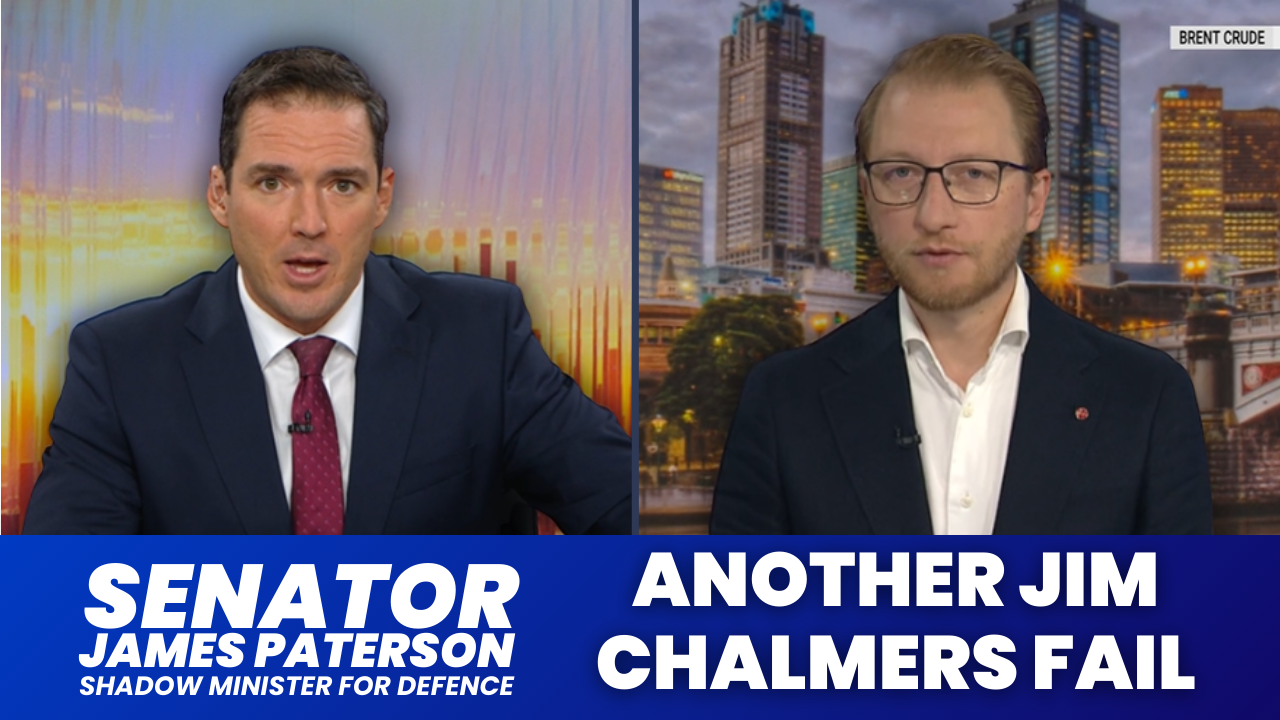
PETER STEFANOVIC: Treasurer Jim Chalmers is about to paint a dire picture of the Australian economy, although much of it is already known to the public. In a speech today, he'll suggest inflation could run upwards of 5% and fuel prices could remain high for three years. Joining us live is Shadow Defence Minister James Paterson for his thoughts on this. Any surprises here, James?
SENATOR JAMES PATERSON: Well, Jim Chalmers is going to make a major, major concession today when he finally admits that the reckless spending on his watch has contributed to higher inflation. He and the government have spent all of this term saying that there's nothing to see here, that government spending didn't contribute in any way to the inflation that we've seen that is completely out of control in this country. And yet he's also going to say in this speech today that he'll be taking a major savings package to this budget. Now, if government spending wasn't contributing to inflation, then why would a savings package be necessary? Of course, when it comes to that savings package, we'll have to look at the details and not just take him at his word. As you know, Pete, this government has previously boasted about saving money when in fact it's just spent more. So let's see what the detail is, but at the very least it's a huge concession from the Treasurer today.
PETER STEFANOVIC: Sure, and he'll blame the war, though, so how much cover does the war give him?
SENATOR JAMES PATERSON: Well, none because, as the Reserve Bank Governor said this week after the RBA decided to increase interest rates, the war in Iran and higher oil prices had nothing to do with the RBA's decision to increase interest rates. It's all to do with inflation, which was already out of control in our economy before the war. Inflation had already hit 3.8%, well outside the Reserve Bank's target band, because government spending is contributing to higher inflation, and so the RBA's hand has been forced by Jim Chalmers' weakness on spending, and Australians are paying the price. Now it's going to get worse because of the war in Iran and higher oil prices, but that's exactly why you need to get inflation under control, because you don't control world events, and if you're contributing to it domestically and international events come along, then things are going to be even worse for the Australian people.
PETER STEFANOVIC: Well, yeah, and he's leaning into fuel today with this prediction that high petrol prices could remain that way, could remain elevated for three years, James. I mean, that'd be frightening for people's budgets if that turns out to be true.
SENATOR JAMES PATERSON: I certainly hope that's not the case, but I think we do have to prepare for at the very least months of disruption and higher prices. It's a massive turnaround from where the government was just a week ago, when they were saying it was right-wing scaremongering and misinformation to suggest that there were any problems at all with petrol and diesel availability and prices. Well, now it's a global and national crisis that requires urgent action. I mean, they should stop gaslighting the Australian people, take responsibility for this problem, and take action to keep petrol prices as low as possible and ensure that supply.
PETER STEFANOVIC: Well, the Prime Minister's taking action today in an emergency session of National Cabinet. So it's been called to try and tackle these fuel issues. What do you want to emerge from it, James?
SENATOR JAMES PATERSON: Well, a meeting is not action. We'll assess the Prime Minister and the government on the things they actually do, not just what they say. Chris Bowen, on Thursday last week, was boasting about reducing the requirements for sulphur and releasing extra fuel from our national storage, and yet it emerged that he didn't actually sign the paperwork until this week. He had let it go for five days before actually doing something. So let's see what tangible concrete actions come out of this, what the Prime Minster is actually going to do to use the powers the federal government already has that the previous government legislated around fuel security, which gives them very good visibility of both supply and demand and allows them to put pressure on wholesalers and intermediaries to make sure that supply gets to where it needs to go. Individual petrol stations are already putting in place rationing measures around regional Australia, and it's having an enormous effect on Australians.
PETER STEFANOVIC: Just a couple of quick ones before we go. I mean, more broadly, James, Qatar has reported extensive damage to its gas field overnight after Iran was initially struck. So we've got this energy war that's taking place right now. If there is a silver lining for us, though, could that be to our benefit when it comes to our LNG exports?
SENATOR JAMES PATERSON: It will lead to elevated commodity prices, which Australia is a net exporter of, and so it will lead to higher revenues for Jim Chalmers yet again. He'll be lucky in that respect, and so it means he's got no excuses not to help Australians through this new cost of living crisis. But I would say overall, Pete, the effect on the global economy and the Australian economy will be negative. And my counsel to parties involved in this conflict would be, as much as possible, leave civilian infrastructure aside. Do not do strikes on civilian infrastructure, particularly energy infrastructure, because that is only going to make this problem for the global economy much worse.
PETER STEFANOVIC: So, and as an aside to that, James, Donald Trump, he lashed out yesterday at us for not helping the U.S. secure the Strait of Hormuz. How did you read into those comments?
SENATOR JAMES PATERSON: Well, it's a sovereign choice for Australia to decide whether or not we want to make any more contribution beyond what we've already made with the E-7A Wedgetail surveillance aircraft, whether we provide any naval assets. The decision that we make, whether we supply them or not, is dependent on what our national interest is and the other competing demands for those assets. But also the capability of those assets, whether they're able to be deployed safely to that region, whether they've got adequate drone and missile defence. And there are real questions about whether or the Australian Navy has adequate defence. We know in 2023 we declined a similar request from the Biden administration to deploy to the Red Sea because we were not confident that our vessels were able to defend themselves adequately in those circumstances. Now, if the Albanese government hasn't done anything to fix that counter-drone and missile defence on our surface combatants, then that reflects very badly on them, and they should be upfront about that. It is yet more evidence that we are not spending enough on defence in this country, and it has real-world consequences, including for our alliances.
PETER STEFANOVIC: That's the Shadow Defence Minister, James Paterson. Another lengthy chat today, but good to have you on as always, James. Thank you so much.
ENDS