

Media
|
Transcripts
June 2, 2026
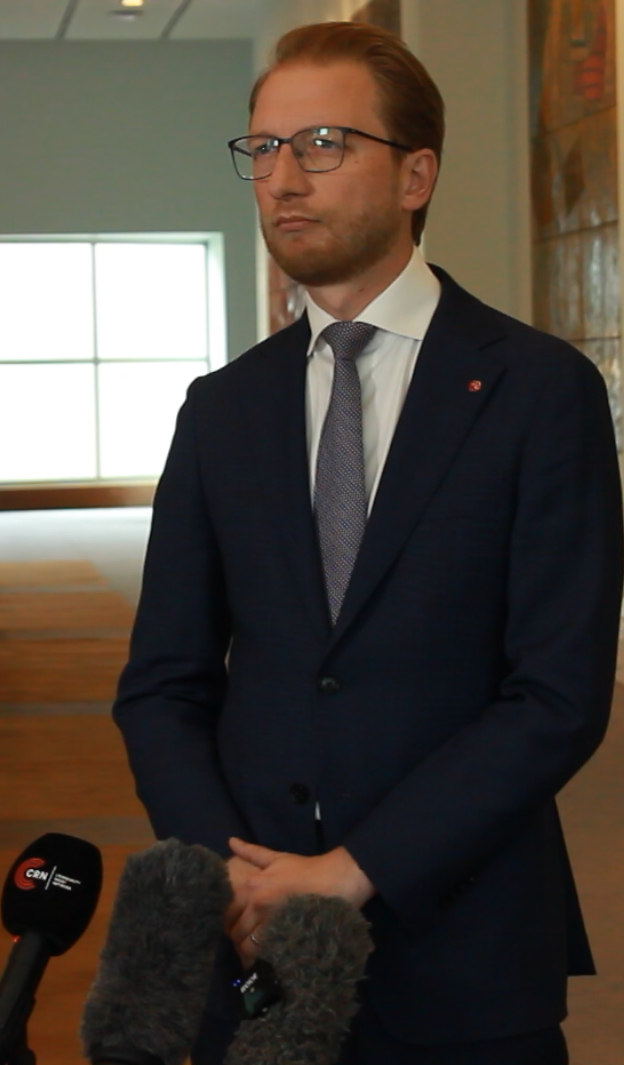
SENATOR JAMES PATERSON: The Albanese government promised they would speak with one voice when it came to foreign policy and defence policy. But we now have a full-on Labor revolt when it comes to Australia's signature defence policy, AUKUS. The Labor backbencher Ed Husic's call today for a caucus vote on the future of AUKUS is a direct challenge to the authority of the Deputy Prime Minister Richard Marles. It's a result of Labor's mismanagement of the delivery of AUKUS. And Richard Marles' failure, along with the Prime Minister, to make the case for AUKUS among Labor's own supporters. But we shouldn't be surprised that Ed Husic feels emboldened to speak out, given that there is an Assistant Minister, Josh Wilson, serving in the Albanese Ministry who has spoken out against AUKUS without any consequences. Richard Marless needs to show leadership. When he's back in Australia today, he needs to haul Ed Husic into line and demonstrate that the Labor government is 100% behind AUKUS and will deliver it on time and on budget as promised.
JOURNALIST: Backbenchers speaking out on government policies is it really the sign of a revolt, is it not more important what Anthony Albanese says, what Richard Marles says as the executive?
PATERSON: If it was only Ed Husic, that might be a fair point, but it's Ed Husic, it's Josh Wilson, it's prominent former Labor figures like former cabinet ministers, Peter Garrett, Carmen Lawrence, it is former Labor Prime Ministers like Paul Keating, it's key Labour unions, it's Labor branches. It's very clear that the Labor grassroots is questioning this government's ability to deliver AUKUS and even going as far as to question whether or not we should proceed with AUKUS at all. It's not in Australia's national interest for that to be undermined anymore. I want the Deputy Prime Minister to show leadership and pull all his caucus and his supporters into line.
JOURNALIST: This is a near $400 billion deal. Shouldn't questions be encouraged on a project of this nature?
PATERSON: It's absolutely legitimate to ask questions about how this government is going about delivering AUKUS, about the details of AUKUS. What is much more concerning is to have a former cabinet minister still in the Labor caucus questioning the merits of AUKUS altogether and to suggest that it should be reopened for a caucus vote. How will that be interpreted in foreign capitals, in Washington DC, in London, in Beijing? We do not need any questions at all about the government's commitment to the delivery of AUKUS. Frankly, maybe they should allow a vote in caucus so they can demonstrate how much support it actually has.
JOURNALIST: Senator, weren't you questioning AUKUS yourself when you said that Australia might need a Plan B with B-21 stealth bombers?
PATERSON: I am an AUKUS true believer. I want to double down on the delivery of AUKUS. I just want to deliver other capabilities as well because I recognise it's an ambitious undertaking and there are risks. But I have never, and no Coalition member has ever, questioned the merits of the AUKUS agreement. We're proud that it was initiated under the Morrison government. We want it to succeed under the Albanese government.
JOURNALIST: Husic has concerns about workforce, about the production line, the capability delays. To the merits of those concerns, do you think there is merit to those concerns?
PATERSON: I'm not as fixated on this question of the number of boats being produced a year as some other commentators are. Yes, it's true we want the US to be able to produce more boats faster, and we're contributing billions of dollars to their submarine industrial base to help them to do so. But it is not written into the AUKUS Act in Congress that unless we hit a specific number of 2.3 boats in the future that a US President cannot certify the transfer of AUKUS submarines to Australia. What a future US President has to do is certify that it wouldn't undermine US national security. And because of the delivery of projects like Henderson and HMAS Stirling, if they can be delivered, that will significantly increase the number of US Virginia-class submarines that can be in the water at any one time. It's a major contribution to the alliance, and it should underpin the transfer.
JOURNALIST: You said the Government has mismanaged the project, Senator. Specifically, what have been the great Government mismanagements of AUKUS?
PATERSON: I have two principal concerns. The first is that the government has not followed the advice of people like Sir Angus Houston, who completed the Defence Strategic Review. Sir Angus has publicly said that unless we're spending a real three per cent of GDP on defence, then trying to deliver August under the existing defence budget will cannibalise other services, and that's exactly what we have seen. It's why this government has cut so much capability from other services, and I think that is contributing to questions about AUKUS. Secondly, on the weekend, the government essentially tore up their so called “optimal pathway” that they themselves produced three years ago on the Virginia-class submarines. Instead of getting two used and one new nuclear propelled Virginia-class submarine, now we're going to get three used submarines and the Deputy Prime Minister is trying to spin his way about why that decision came about.
JOURNALIST: How big a difference do you think that is, the second hand versus the new? Andrew Hasty said yesterday that this is a really dud deal. He would have sent it back and said no to the Americans. Do you think that's what we should have done?
PATERSON: I'm concerned about it, and this afternoon I'll be asking questions to the Department of Defence about it because if it is the case, as the Deputy Prime Minister says, that this will be cheaper and simpler, then why wasn't this the plan from the beginning when they outlined the optimal pathway? Nothing has changed about the price or the simplicity of delivering three used compared to two used in one new submarine. It's really up to the government to explain that and to demonstrate some transparency on this critical national project.
JOURNALIST: Senator, doesn't Mr Husic then have a point? You're talking about concerns, about getting now three used submarines, instead of the original plan. That's one of his concerns too, is it not a logical follow-on from that, as Mr Husic points out, to go well, what happens next from here?
PATERSON: No, the answer to those concerns is to double down on the delivery of AUKUS, it is to fund our ADF adequately, it is to make sure we're capable of keeping our Collins class submarines in the water, it is to make sure that we're able to sustain submarines at Stirling and Henderson, it is to make sure at Osborne we're able to build future SSN-AUKUS submarines with the UK when we need them. The answer is not to scrap it altogether as Ed Husic has proposed.
JOURNALIST: Given the questions that both supporters and opponents of AUKUS have, do you not think there's a genuine public interest in having some sort of enquiry, whether it's run through the parliament or independent, separate from what Peter Garrett is doing, but to be able to have some transparency around some of these questions and actually get answers?
PATERSON: We have a new Statutory Committee of Defence, it's modelled on the Parliamentary Joint Committee on Intelligence and Security and it will be able to provide the classified scrutiny that a project like this needs, but it shouldn't be about whether or not we should deliver AUKUS at all, it should be about how we can deliver AUKUS better and faster.
Thanks, everyone.
ENDS