

Media
|
Transcripts
September 28, 2026
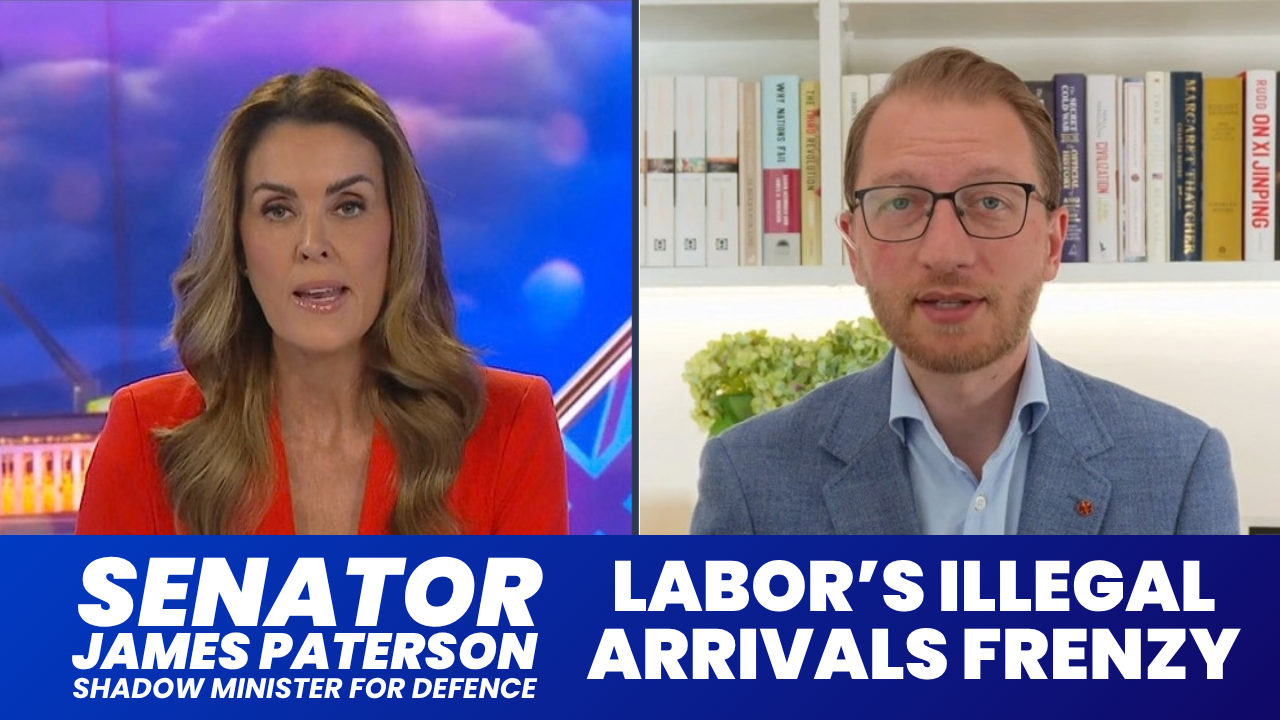
PETA CREDLIN: Let's bring in my next guest, Senator James Paterson, Shadow Minister for Defence for the Coalition. I'll get to the terror plot in the UK in a moment, James, but, you know, President Yudhoyono, famously told John Howard, the only way you're going to stop the boats is if you take the sugar off the table. You have to create a regime that, if people get to Australia, they don't get what the people smugglers sold them, and that's a permanent life in this country. But that's exactly what Labor has now given them.
SENATOR JAMES PATERSON: That's exactly right, Peta, and no one knows this history better than you. But a very brief recap for your viewers: in the lead up to the 2013 election, when Tony Abbott had put an enormous amount of pressure on Labor over their border protection failures, Labor panics, brings Kevin Rudd back as Prime Minister, and he makes a commitment that anybody who arrives here by boat will never settle permanently in Australia. And just to make sure that commitment is crystal clear, his government takes out newspaper advertisements in Southeast Asian nations' newspapers, full-page advertisements, which make this commitment very clear. Now, for the best part of a decade, the next Coalition government, which restored those settings, those successful deterrent settings, kept that promise. They did not grant these people visas. But now, in their wisdom, with Tony Burke again having another disastrous go at being migration minister, they've given those people, who they promised they never would allow to settle permanently, effectively permanent visas and a pathway to citizenship. This is an incredibly reckless thing to do. It risks going back to those bad old days when 50,000 people arrived in just six years because right now people smugglers and their victims will think that the Australian government is weak, that we'll back down and you'll get a pathway to permanent citizenship in Australia.
CREDLIN: And as I said, James, it means welfare, it means family reunion rights, and more. So it's not just 30,000 people, it's 30,000 individuals and however many they want to apply to bring here to Australia. When I first heard the news of what occurred overnight with this foiled terror plot in the UK near a military base, I went straight to that interrogation by your colleague, Senator Jess Collins, in Estimates recently, where she looked at, I guess, concerns she has about security around our own military bases. Have a listen.
[CLIP START]
SENATOR JESS COLLINS: This is a company that we give how many billions of dollars to provide security for our personnel, and you won't tell me where they're based.
[CLIP END]
CREDLIN: So the front company we often see at the bases of course is Wilson Security, but there's a parent company and there's whole other backstory behind that company that we're not allowed to hear about or certainly we didn't get the evidence out of estimates. Given what we saw in the UK, is this a concern for you, James?
PATERSON: Unfortunately, Jess's concerns have been vindicated by these events in the United Kingdom and also by events in our own country. There was an incursion at RAAF Base Darwin where someone allegedly gained access, assaulted a service member and allegedly stole a vehicle before leaving. And of course, other reports that we have regular drone incursions, including at some of our most sensitive RAAF bases. I think we have to realise the dangerous strategic environment we're living in. We have threats from a range of different actors, including hostile nation states, but also extremist Islamist organisations that would love nothing more than to do us harm, and they'd particularly love to do us harm on a joint US-Australian base, as they appear to have tried to have done on this joint US-UK base over in the United Kingdom. And so we need to radically step up our base security so these incidents stop happening, and we keep our service personnel safe.
CREDLIN: There was a game being played last week, wasn't there, with the OpenAI threat briefed to the government on the weekend, but we didn't hear anything about it until the end of the week, until the government needed a distraction. Then there's been a whole lot of hand wringing over the last four or five days of the government saying, well, this is why we need all these tough new data security laws, and this is what we're worried about digital duty of care. No, not really. They're completely different. They're about censorship. This is about cyber security, defence. And military protection of all of our government infrastructure. Now, the Prime Minister gave a big speech, was it June or July this year, about AI and did not even mention the word cyber security. I think the government's been asleep at the wheel, and I think they're now scrambling on this issue.
PATERSON: You're absolutely right, Peta, and it's critically important we do not conflate these two separate issues of AI and cybersecurity on the one hand and the digital duty of care censorship laws on the other. The Coalition will fight that every step of the way because we fundamentally believe in freedom of speech. We won't allow that to be taken away. On AI, though, you're absolutely right, the most obvious use case for artificial intelligence in the security realm is both for attackers and defenders in cybersecurity. AI can identify holes in security networks and exploit them. It can also help identify them and patch them, and the Prime Minister neglected that in his big AI speech and is now scrambling to catch up and trying to use this incident as an excuse to justify his delayed action. The truth is the government has under invested in our cyber defences of our critical government networks for years, and there could be a much more serious incident than this one at any time that could actually target Medicare rather than just Medicare statistics, or the ATO, or other critical data held by the government.
CREDLIN: Hey, you're getting a big response to your online petition. You're close to 100,000. You might've hit 100,000. Do you think you're going to get movement on this from the government?
PATERSON: I really hope so. We just crossed 97,000 signatures today, Peta, and thank you to you for promoting it on your show. Australians from all walks of life are horrified by the idea that we would throw away our military heritage and we would damage our military capability in a dangerous world. Richard Marles said on this network on Sunday that most diggers never went through Victoria Barracks Sydney, one of the properties proposed to be sold. Well the men who enlisted to fight for Australia in World War One and World War Two passed through that property, and I think that's worth preserving. I think that's worth defending, and if you do too, I'd value your support.
CREDLIN: There you go. There's your call to action from Senator Paterson. Thank you for your time, James
ENDS