

Media
|
Transcripts
August 12, 2026
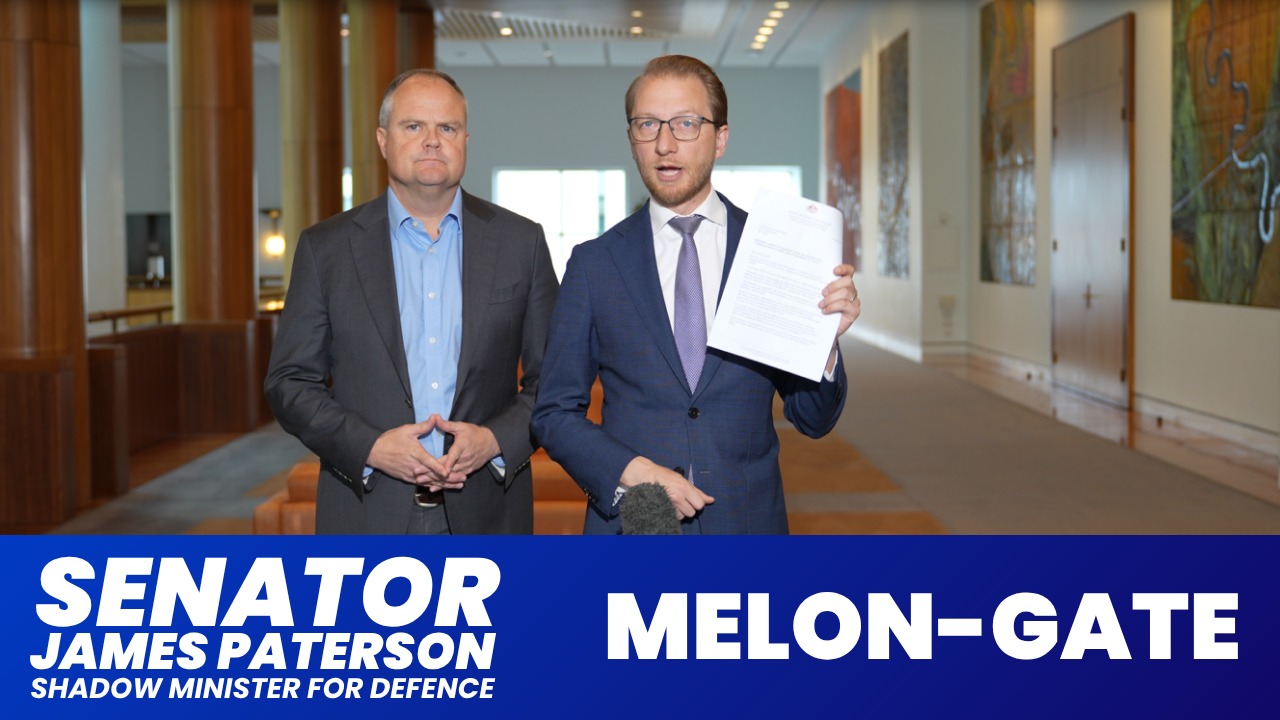
SENATOR JAMES PATERSON: Good morning, in politics it's often not the original crime that gets you, it's the cover-up. Anthony Albanese's original crime was to show very poor judgement in going on a podcast and engaging in lewd banter and making crude gestures about one of Australia's most important allies and the female leader of one of our most important allies. Had the Prime Minister acknowledged his error of judgement, as he did with Kylie Minogue, and quickly apologised, everyone would have quickly moved on from this story. But we're still talking about this a month later because the Prime Minister has stubbornly refused to admit that he got it wrong, and now he's trying to cover his tracks. It was bad enough to make disrespectful comments about the Japanese Prime Minister. It is worse that now the government appears to be leaking confidential correspondence from the Government of Japan to the media to try and exonerate the Prime Minister and downplay the seriousness of what he has done.
That's why yesterday Ted and I have written to the AFP Commissioner to ask that there be an investigation into the apparent unlawful disclosure of confidential correspondence from the Government of Japan to the Department of Prime Minister and Cabinet. This is a serious matter. It is important that our closest allies have confidence of when they share confidential correspondence with us that it will not find its way in the media. In a dangerous strategic environment, trust with our closest partners is critically important. So it is important that the AFP get to the bottom of this matter, find out how this material appeared in the media and ensure that it never happens again. Ted.
TED O'BRIEN MP: Thank you, James. Japan is a special strategic partner of Australia, this is a serious matter, and it has to be dealt with seriously. Trust is the currency of diplomacy, and trust erodes between Australia and a partner as important as Japan. That reflects very poorly on our ability when it comes to diplomacy with other nations too. The Prime Minister's responsibility is to care for the nation's interests, not his personal interests. The Foreign Minister's responsibility is to be the nation's chief diplomat, not the Prime Minister's chief apologist. We cannot afford for this saga to continue. The Prime Minister had an opportunity to nip this in the bud, and be up front. He needs to do that now. The more that he and his ministers go out and publicly seek to defend the indefensible, the bigger an issue this becomes. We are a serious nation that should be governed by serious people. This potential breach of a confidential note needs to be investigated, otherwise, Australia's own national interests are at stake.
Happy to take any questions.
JOURNALIST: You may not of had a chance to see it yet, but Julian Hill was just on News24. He said that this action from you two was a politicisation of the AFP and was distracting from the investigation of more important issues like child sex offences. What's your response to that?
PATERSON: I'm happy to take that. Julian Hill must have a short memory. Even I am old enough to remember when the Labor Party in opposition would refer Coalition Ministers to the AFP over breakfast in the morning, sometimes multiple times a day. And I remember particularly in 2022 when Emmanuel Macron's text messages found their way into the media, how outraged Labor was at the time. In fact, in Senate estimates, Senator Katy Gallagher pursued the government about whether or not there had been an AFP referral into that apparent leaking of those messages. So Labor can't have it both ways. It's either always wrong for confidential communications from our allies to find their way into the media, or it's wrong only when their political opponents do it and not when they do it. I mean, that is not a serious proposition. The leaking of confidential information from our closest allies undermines trust in Australia at a time when we need to have the highest levels of trust.
JOURNALIST: Senator, the AFP has confirmed they got your correspondence, I won't give any further comment. Have you heard if they are investigating?
PATERSON: Only that the AFP has confirmed they received our correspondence, I hope, and I'm sure, they'll take it seriously because under Division 122 of the Criminal Code it is an offence to disclose confidential information if you are a public servant. That includes, for example, members of the Prime Minister's office, including his media team. And in this letter I've encouraged the AFP to ask the Prime Minister's department whether or not the PMO asked them for this correspondence, and I've encouraged them to make sure that records are maintained. It would be very unfortunate if the AFP is not able to conduct an investigation because records in the Prime Minister's Office are not kept, including electronic communications.
JOURNALIST: In hindsight, should the Macron communication have been investigated by the AFP?
PATERSON: That's a historic matter, David, it was up to the government at the time to deal with that. I'm just pointing out the government's hypocrisy here.
JOURNALIST: Ted, you met with the Japanese ambassador on Monday. Did he express any concern about these comments that Anthony Albanese made?
O'BRIEN: I'm happy to confirm that, yes, I did meet with the Japanese Ambassador, and I expressed my deep regret of the Prime Minister's actions. I have no authority to speak on behalf of the government or the Prime Minister. If I did have such authority, I would have apologised on behalf of the Prime Minister and the government. But I did make that expression to the ambassador. Beyond that, I won't be talking about the discussion. Again, that would be a breach of confidence, and that is what we are here talking about today, the fact that it appears that the Australian government has breached a confidence with the Japanese government, and that needs to be investigated.
JOURNALIST: How was that received by the ambassador when you expressed your regret?
O'BRIEN: Again, I won't be outlining anything further, I'm confirming that I did out of respect for the relationship between Australia and Japan to meet with the Japanese ambassador, to express my deep, sincere regret that the Australian Prime Minister did conduct himself in the way he did.
JOURNALIST: Was that why you met with him? Is that's why you had that meeting?
O'BRIEN: Of course, there were other things discussed, but that won't be what I'll be going through today. There has been a breach of trust here, and that is for the Albanese government to explain. Trust is the currency of diplomacy. We have to remember we're talking about a sacred partnership here with Japan. This year we should be celebrating 50 years since the basic treaty of friendship and cooperation, continuing to deepen that relationship. Instead, we are having to deal with this matter because we have a Prime Minister who lacks a moral compass and severely lacks judgement. He has an opportunity to come out, make an apology, and then let's move on.
JOURNALIST: In this cable, though, it does state specifically that Japan believed there was no ill will behind the comments, they believed they'd been sensationalised, they were planning to not comment so as to not draw further media attention to it. Japan doesn't seem that offended or that upset by the comments the Prime Minister made. Why are you seeking to apologise or show your regret if Japan doesn't believe there is any ill will there?
O'BRIEN: I don't intend to be making any commentary or seeking to interpret the words from Tokyo. I'm speaking on behalf of myself and the Coalition when I say that we have deep regrets for the actions of the Prime Minister and his words on that podcast. And now we are even more concerned that what was a lapse of judgement and poorly chosen words, an attempt of crude humour at the expense of the Japanese Prime Minister, is now turning into a far more serious issue of our national interests simply because there appears to be a leak of a confidential diplomatic note. The seriousness of this cannot be overstated. We need to ensure that the government comes very clean on this, and the AFP has been asked now in the letter sent by James and myself to investigate.
JOURNALIST: But if Japan's not offended by this, was your earlier point-
O'BRIEN: I've already answered that, I won't be commenting.
JOURNALIST: But it is clear, like, you're here referring this letter to the AFP. You're therefore confirming that you believe it's legitimate. How can you then discount the actual contents of the letter that you're saying is so serious we have to refer its leak to the AFP?
O'BRIEN: I won't be commenting on how Tokyo interprets this entire saga. What I can say to anyone who is watching, whether it be the Japanese-Australian community here locally or whether it be anybody visiting from Japan, that Australia takes our relationship with your country very seriously. We truly believe that we need to build deeper relations. We understand the importance of trust. And that means where there is correspondence, confidentially, between our two governments. That has to be kept confidential. And we hope the AFP investigates it.
JOURNALIST: Senator Paterson, why is the Coalition now supporting One Nation's foreign fighters legislation? I believe, previously, the Coalition was going to draft its own legislation.
PATERSON: Well, we not only have drafted our own legislation, we introduced it into Parliament earlier this year. And we have led every step of the way on the government's weakness on allowing firstly, so-called ISIS brides, really members of ISIS, to return to our country and now, potentially ISIS fighters to come back to our country. We've said consistently we're happy to work with anyone who wants to protect Australia from the serious national security threat posed by these returning radicalised people, and we've consistently said we'd support the introduction of bills and the referral of bills to committees. I think that's the appropriate way to test the constitutional issues that have been raised. We're not willing to just take Tony Burke's word for it, given the government has misled the parliament and got it wrong multiple times on the constitutionality of immigration bills in the past. We think this should be tested in a parliamentary inquiry where experts can come and give evidence, and we can make a judgement on the merits of the bill or otherwise after that.
JOURNALIST: Isn't there a concern here about legitimising One Nation in the Senate for a piece of legislation that will ultimately fail in the House?
PATERSON: I'm much more concerned about the national interest here and our national security here. If there's anything that can be done to stop foreign fighters returning to Australia, we should do that. We think the bill that Jonno Duniam, our Shadow Minister for Home Affairs, drafted and had introduced earlier this year, goes a long way towards doing that because one of the critical elements of that bill, which is not current in the law, is it criminalises a third party facilitating the assisted return of someone connected to a terrorist organisation, or someone who has been in a declared area. Now, we know that the previous return of ISIS brides has been facilitated by Australian citizens, for example, securing their passports and transporting them to them. If you made that an offence, it would make it much harder for these people to return to Australia. That bill is still ready to go. That bill can be legislated. I do not believe there are any constitutional risks with that bill, and the government could work with the opposition to pass that bill tomorrow.
JOURNALIST: Just quickly on your colleague Andrew Bragg, who is speaking at the National Press Club today. One Nation has accused the Coalition of simply copying their own migration cards. What do you have to say about that?
PATERSON: Again, we've been talking about this issue for years, we led the debate throughout the last term on Labor's failure to control our borders, on the way in which they allowed migration to become unsustainable and out of control. And we led the debate in this Parliament by making clear that we would peg the NOM to housing completions to allow the housing market to catch up. And making it clear that we believe that taxpayer-funded benefits should be for Australian citizens, for example, including the First Home Buyers Deposit Scheme, which, extraordinarily, this government has handed out tens of thousands to foreign citizens. We don't believe that Australian taxpayers should be funding foreign citizens to buy first homes in Australia.
Thanks, everyone.
ENDS