

Media
|
Transcripts
October 22, 2026
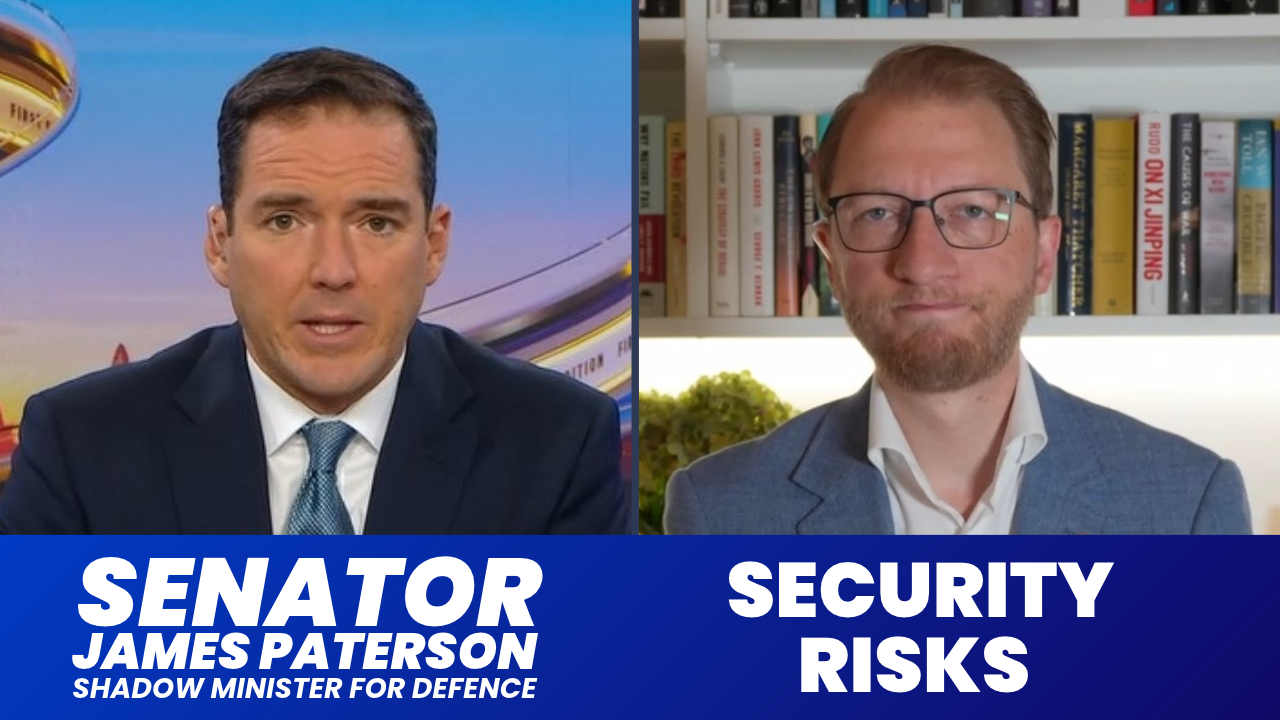
PETER STEFANOVIC: Joining us this morning is the Shadow Defence Minister, the Victorian Senator, James Paterson. James, Morning to you, how do you even make sense of that news?
SENATOR JAMES PATERSON: Well, it's a really distressing piece of news from Phil, who I thought spoke incredibly powerfully and eloquently on behalf of his wife and his family yesterday. To lose both of your legs in your line of work as a member of parliament, just trying to serve your community, is a truly shocking thing, and it's a particularly shocking thing because Helen is such a decent person and respected across her community and across the Parliament.
STEFANOVIC: New advice has been given to MPs from security agencies, such as varying travel patterns, not to telegraph movements ahead of appearances, even though appearances are a central part of your job. What are your thoughts on that newer advice that you and other MPs received yesterday?
PATERSON: Look, it's not actually that new. We have been given that advice before, but there are probably some MPs who are hearing it for the first time, and it's perfectly logical operational security advice from police when you're dealing with a high-profile person. They are the mitigations that you can put in place to reduce the risk and exposure to yourself to make it hard for someone to identify you and track you, but it's not terribly practical for a Member of Parliament that wants to serve their community. It's not always possible to vary your route, and it's certainly not always possible to never advertise your appearances in the future because your community has to know where you are to meet you, and it is a kind of inherent part of the job.
STEFANOVIC: Yeah, that's right. So what, if anything, are you committed to doing that you don't already do, James?
PATERSON: Well, look, I've always been someone who's been very mindful of my security because of the portfolios I have held, and I do everything I can to minimise the risk to my family in particular and my staff and also the people that I meet with. I'll be even more conscious of that than I have been recently. But I think the reality is we need to let the police do their work and better understand the motive and also what went on in this person's mind before they allegedly carried out this attack. It may well be that it was not premeditated and planned. It may well be that it was spontaneous and opportunistic. And if that is subsequently proven to be the case, there are a lot of different implications that come out of that. And we need to really carefully understand how and why this happened before we draw immediate conclusions about what we need to do to protect ourselves.
STEFANOVIC: So on that point, I mean, if it is mental health, if it's along those lines, does that change the more broader or general threat environment at the moment?
PATERSON: Well, I think it is never a bad time to think about the tone of public debate, how we conduct ourselves, how we're contributing to a healthy civic culture and public discussion. But if it is the case that it was mental health, if it is the case it wasn't politically motivated, if this person was not triggered by events or politics, then of course those things, while they might be good to do, would not have prevented this and may not prevent the next person under similar circumstances from doing this. The only thing we can do to guard against this is to reduce the exposure of MPs, and I've said before, I think our electorate offices are exposed. I think they are not well hardened to protect our staff and our constituents and anyone else interacting with their federal member of parliament, as well as MPs. And not every office around the country is well set up to minimise that risk.
STEFANOVIC: So what needs to be done there? Is it extra security, is it extra cameras?
PATERSON: There certainly needs to be a review of parliamentarians' security, and it may well be that cameras and bollards and other things like that can reduce that physical security risk. But I think it's also very important for members of parliament to remember that we are not the only people whose profession puts us at risk. There are emergency service workers who go to work every day with the risk they won't come home to see their families, and everybody deserves the right to come home from work safe. Why this is particularly shocking is because it's so rare and unusual in Australian politics, we have been almost completely violence free in our political system. It's been 30 years since the last very serious incident happened, and because it strikes at the heart of who we are. We settle our disputes through politics, peacefully. That's core to our national identity, and that's why it's been so shocking.
STEFANOVIC: What about you personally, I mean, are you feeling any more or less anxious about things at the moment, about your own security?.
PATERSON: I'm not feeling personally anxious. I have received threats in the past, and I've had to take measures to protect myself and my family, and I'm conscious of my personal security because of the issues I've been vocal on in the past, which does attract a very heated public debate, and I've had to weigh up my interventions into public debate knowing that there will be backlash. But my view is that we are here to serve our communities, we are here to sincerely advocate for the things we believe, to be true to our conscience. And if ever we can't do that, then public life is not the right place for us. So we, of course, have to make sure that public life is as safe as it can possibly be for anyone who wants to serve. But we also have to understand that public life does involve political risk. It does involve criticism. And as long as it is just criticism, then we have to be willing to bear that burden.
STEFANOVIC: Well, I mean, in its name, public life needs the public.
PATERSON: Indeed.
STEFANOVIC: The dirt sheet on Helen Haines sent out by the Prime Minister's office has been the other story this week, James, and the PM just plainly not answering Kieran's questions yesterday when Kieran asked him about it, which speaks on its own. Have you got a thought on that?
PATERSON: It's really a matter for the Prime Minister to explain and for the Prime Minister to reconcile with the very warm things he's said about Helen Haines. I am someone who believes that we are subject to scrutiny, and that's a healthy, normal thing. And I expect my conduct in public life to be scrutinised, not just by the media, but also by our political opponents. And when I make decisions about how I vote, about what I say, about how I spend public money, I'm conscious that it could be being scrutinised, not just by the third estate, by you and your colleagues in the media, but also by our political opponents who have an incentive to criticise us and damage our standing as well.
STEFANOVIC: Okay, James Paterson, thanks for your time this morning. Appreciate it.
PATERSON: Thanks, Pete.
ENDS