

Media
|
Transcripts
October 20, 2026
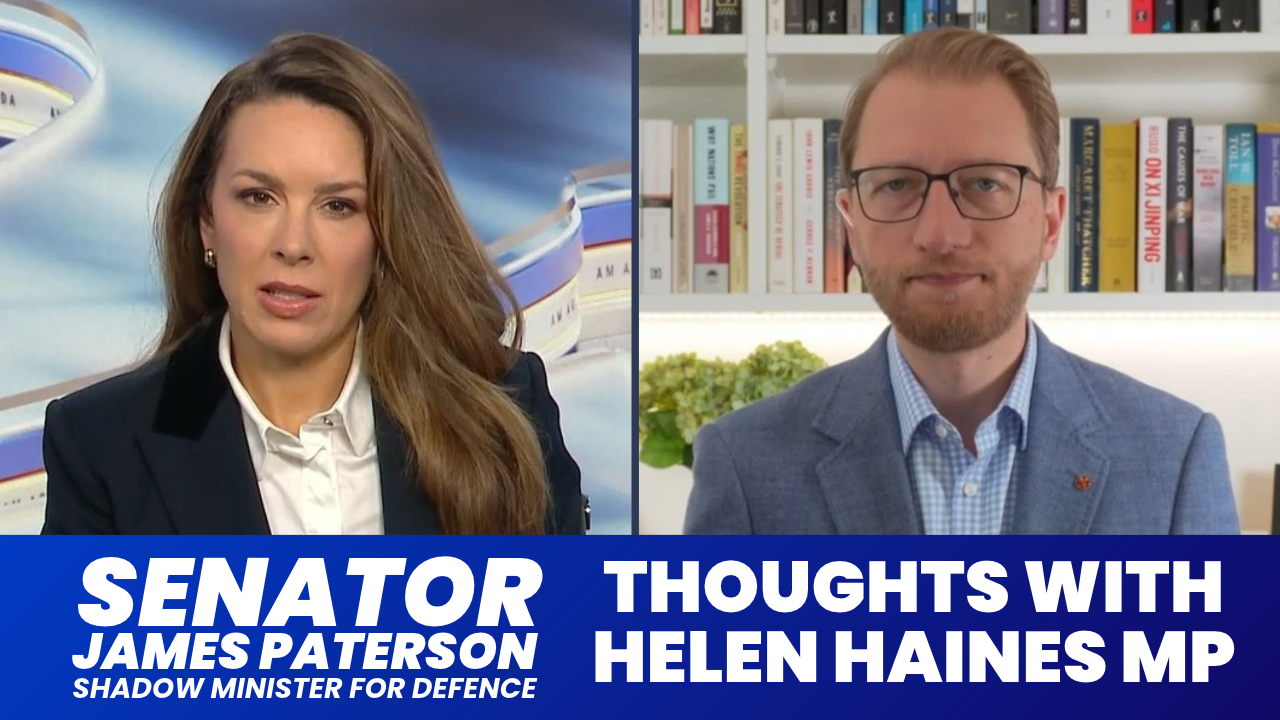
LAURA JAYES: I want to bring in the Shadow Defence Minister James Paterson now, he's a fellow Victorian. Your initial reaction, James?
SENATOR JAMES PATERSON: Well, it's a particularly shocking thing that this has happened to someone like Helen Haines. Helen and I have different worldviews, but she's the kind of parliamentarian that doesn't allow a difference of opinion to get in the way of being a warm, and decent, and friendly, and collegiate person. She is the kind of person you pass in the corridor who always has a smile and a friendly hello. She asks after your welfare and your family, and she's always pursued the issues that are important to her and her community very thoughtfully, very sincerely, and so it's particularly shocking to see someone like that be the target of something like this.
JAYES: Are you surprised, James, what have you seen that we haven't seen in the last couple of years?
PATERSON: I'd like to say that I was surprised, Laura, but I'm not at all surprised. In fact, just last week in Canberra, I had a conversation with a Labor colleague about the threat environment and the increase in risks to parliamentarians and the need to address that. When I was the Shadow Minister for Home Affairs in the previous parliament, I would regularly ask the Australian Federal Police in Senate estimates how they were tracking threats against public office holders, including parliamentarians. And at every single session, they would come back with increased and alarming statistics about the rate of increase. Now that's obviously driven by a range of different things. One of the big changes is just the change in the communications environment and social media, which makes it easier for people to fire off an angry message or threat. But also, I think it's clear that the political environment has become more heated in recent years, particularly post-COVID, where people are not allowing disagreements to remain just about policy differences, but they're becoming increasingly personalised. And so that's why there has been these increasing threats tracked and increasing investment and spending on protection of officeholders. But unfortunately, in this instance, it hasn't been enough to stop this from happening.
JAYES: No, it hasn't. Do you think we all need to do better?
PATERSON: Look, of course, I mean, it will be really important to understand what the motives of the alleged perpetrator of this incident are, and there will be implications from that, but regardless of what this person's particular grievances or ideology is, it is another timely reminder about the way in which we conduct ourselves in public life, included in that as parliamentarians, but also the media and other commentators and influencers who do help shape the public debate. We should be very vigorous about our policy disagreements. We should not take a backwards step about the things that we disagree on because that's a healthy democracy. But of course in recent years I think it has become increasingly personalised in a way that I never thought was healthy and I've always worried would contribute to an incident like this.
JAYES: Yeah, there's the health of a democracy, there is healthy debate, and there's disagreeing well. Do you think any of us do that?
PATERSON: Look, I think it's something we all need to reflect on, and there's no better reason to reflect on it than a shocking incident like this. I'd also say that we should think very carefully, and I've said this before, well before this incident, that we think about the kind of democracy that we want to have. Australian parliamentarians are uniquely accessible to the public. We go down to the shops and the supermarket like anyone else. You can bail us up in the street and give us feedback, positive or negative. And that's a healthy thing about a democracy because we want our parliamentarians to live in their communities, to be part of their communities, to be accessible to their constituents, to be in touch with their communities. In other democracies, there are a lot more layers of protection between their officeholders and the public. Some countries they have all around the clock security, they don't go to the supermarket because of the threats to them. And I think that is not the kind of democracy that we should want to have in this country.
JAYES: Yeah, the street walks, the crowd, the meeting of constituents that you weren't planning, it is all such an important part of our democracy. Let's hope we don't lose that. James, it's no good segue here, but there's some other really big news that has just dropped. National Australia Bank has just announced that it is cutting 2,500 jobs. It's 5.9% of the workforce. These are redundancies. It's shifting focus to growth and technology. The bank also says that 1,500 of these jobs will go before the end of this year. That's a hell of a lot of people losing their jobs before Christmas.
PATERSON: You're right Laura, that will be incredibly disappointing and distressing news for NAB employees and their families this morning to learn. I'm conscious that NAB is a bank which is headquartered here in my home state of Victoria in Melbourne and that many of those people affected will be from Victoria. I think it's important for NAB to explain why these kind of cuts, which are very severe, are necessary and justified and really it's up to them to do that.
JAYES: James, thank you for your time. I appreciate it.
PATERSON: Thanks, Laura.
ENDS