

Media
|
Transcripts
August 24, 2026
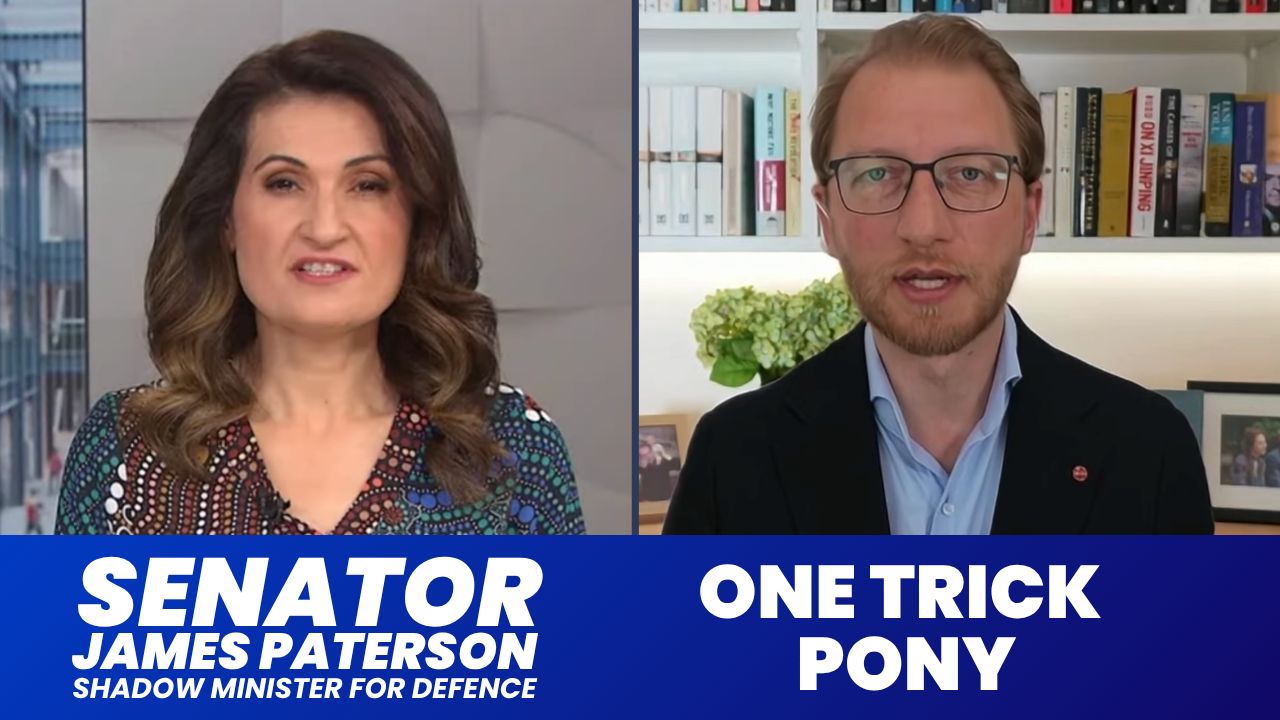
PATRICIA KARVELAS: Shadow Defence Minister James Paterson is my first guest today. Senator, welcome to the program.
SENATOR JAMES PATERSON: Good to be with you.
KARVELAS: The Prime Minister, Anthony Albanese, said there will be no change to WA's share of the GST while he is in the top job. Is that fair to other states? You're a Victorian, is that fair?
PATERSON: Well, we put the GST deal in place, and we're very proud of it. Firstly, because it puts all states on a level footing. No state, WA included, can fall below 75 cents on the dollar in their GST contribution. I wouldn't want to see Victoria fall below that floor or any other state for that matter. But also, it incentivises states to follow Western Australia's lead and take advantage of the natural resources they have. It allows you to recoup a lot of the benefit of taking advantage of those natural resources. If my home state of Victoria didn't choose to lock up, for example, its gas reserves for the better part of the last decade, it too could have benefited from higher royalties and would have lost less GST as a result of a deal like this. So states are masters of their own destiny. If they want to have more royalty revenue, they should pursue that, and they won't be penalised for it.
KARVELAS: Ok, the Productivity Commission wildly disagrees with the thesis you just pushed and, in fact, calls for pretty significant change. Let me put this to you, you're happy with what the Prime Minister has said then? You accept that he won't change the WA Bill?
PATERSON: I greatly respect the Productivity Commission. I think it's a really important institution, but like all economic institutions, it's not perfect. In fact, previous Productivity Commissioners have apologised for how badly they got wrong the growth of the NDIS, for just one example. And the reforms to the GST that the Morrison government implemented were in part based on a Productivity report recommendation, which recognised that it was unjust and unfair for GST revenues to fall as far as they were allowed to in some states, including WA. So I take the Prime Minister at his word, except I would say, why has he allowed this review to take place if he had no intention of making any changes? It looks to me like, over in WA, standing next to Roger Cook, he wants to shut the door on politically damaging changes. But why did he allow the PC to do this inquiry in the first place?
KARVELAS: Okay, so you would have shut down the PC from even looking at this.
PATERSON: Well, I just think if the government has no intention of making any changes, they should have made that clear to the Productivity Commission and maybe would have saved all this time and effort, they could of focused on many other productivity challenges. Because productivity, Patricia, has gone backwards on this government's watch quite severely.
KARVELAS: It has, productivity is an issue. Let me ask this then.
PATERSON: And that is really harming our productivity and our prosperity.
KARVELAS: So, do you think he should say to the Productivity Commission, because it does take a lot of resources and we are paying for it, all the taxpayers watching this show are paying for the work that's going into it, should he order them not even to do a final report?
PATERSON: Well, I think he should ask the Productivity Commission to have a look at Labor's industrial relations laws and whether that's enhanced productivity.
KARVELAS: That's not the question I asked. That is not the question I asked you.
PATERSON: But to come back to your point, Patricia, there are scarce, limited resources in an institution like the PC. They could spend time looking at the GST, which everybody agrees is not going to change, or they could look at industrial relations, which Labor has made significant changes at a time when productivity has gone backwards and unpacked whether there's a relationship between those two things.
KARVELAS: Okay, but the report, we should get a final one, do you think?
PATERSON: Well, if the PC wants to conduct a final report, it's not up to me and the Opposition to tell them they can't do that, but our position is clear. We put the GST deal in place. We support it. It will not be changed.
KARVELAS: It sounds like it would be a waste of their time though. You mention industrial relations. Does that mean you want to make big changes to industrial relations in the country?
PATERSON: No, it doesn't, Patricia, and that's not my portfolio. That's for Jane Hume, and others to look at. But our former Treasurer Peter Costello has made the point that it's slightly curious that one of the factors that we know that does influence productivity is labour market productivity. This government has introduced significant re-regulation of the labour market at the behest of the unions, and you would think that the Productivity Commission would be curious about what the impact of those changes have been on productivity, given that productivity has gone backwards at the same time. So I think perhaps that's a more fruitful area for them to look at rather than the GST deal, which is not changing.
KARVELAS: You say One Nation is all over the shop on immigration, but isn't that effectively what's happening in the Coalition? We had Shadow Housing Minister Andrew Bragg calling for a rate of immigration very recently, which was 180,000, in order to rebalance the housing demand. You haven't backed in that figure, so isn't your side of politics all over the shop?
PATERSON: I'll come to our policy in a second, but just first I want to respond to something Barnaby Joyce said. He let David Farley off the hook because he's new in politics. Well, Pauline Hanson is not new in politics. She's been in parliament and public life for 30 years. She's a professional politician, and she has contradicted herself on her own migration policy. She'd said that we're going to have 130,000 net overseas migration. She said that we're going to 130,00 permanent migration. And she's now going back and deleting old tweets about how migration would arguably be negative on her watch. So One Nation is all over the shop. We've been really clear about some of the principles of our migration policy and Angus Taylor's plan. Already, we've said that we want to link housing completions to the net overseas migration rate. Already, we said that we want to tie welfare eligibility to Australian citizenship. And already we've said we want to put values at the heart of Australia's immigration system to make sure people coming to our country share and want to uphold our values. Now we will have more to say about the specifics throughout the term, but we've made a good start in my view already.
KARVELAS: Okay, but you don't have a figure, when will you tell us?
PATERSON: Well, one of the reasons why it's important to do the work thoroughly, properly, get it costed, get modelled, consult stakeholders, is so you don't have four policies in four weeks, like One Nation has had, on their immigration policy. We're going to take the time to get it right so that by the time the next election comes around, Australians know exactly where we stand on migration and they can vote for or against us based on their judgment of that policy.
KARVELAS: And, level with the public, your figure is never going to be lower than One Nation's figure, is it?
PATERSON: Well, who knows what One Nation's figure is? It's ranged between negative 100,000 and positive 230,000, higher than Labor's supposed target. So who knows what will happen between now and the next election with One Nation targets? It might change again.
KARVELAS: But it'll never be lower than 130,000.
PATERSON: Well, Angus Taylor has said it will be clearly below 200,000, and David Farley says it's about 230,000. So it depends who you believe and who you listen to in One Nation.
KARVELAS: Pauline Hanson has said that's not their policy though. I mean, when your leader says...
PATERSON: Pauline Hanson has had three different positions on this issue.
KARVELAS: When your leader says that, for instance, Andrew Bragg's number isn't the policy of the party, we're told to believe him, shouldn't we believe Pauline Hanson when she corrects one of her MPs?
PATERSON: Well, which version of Pauline Hanson's statements should we believe? Should we believe that it's permanent migration? Net overseas migration? Or the total number of visas granted? Those are three different figures, all of which she has argued for in the last couple of months. So I wouldn't know what Pauline's Hanson policy is. This is what it is today, tomorrow it could be something different again.
KARVELAS: Ok, but do you accept that there has been freelancing on your policy and the number as well?
PATERSON: We haven't settled our policy yet, and when we do, we will lock in behind it because we will have done the work to arrive at it. We would have done modeling, we've done the costing, we have done consultation, it will be a rock solid number that we stand behind and can implement in government that will bring those numbers down, that will lift the standards and will have a manageable impact on the economy and on the budget.
KARVELAS: And on the backpacker question, because that's been a big part of the contention around your final number. What's your position on whether backpackers are part of this?
PATERSON: No, my position is the Coalition's position, and when we announce our policy, I'll support our policy because I'll be part of the deliberative process of the Shadow Cabinet in arriving at that policy.
KARVELAS: So, that's not clear yet then?
PATERSON: Well, we haven't announced our policy yet, Patricia, and when we do so...
KARVELAS: Because your Shadow Home Affairs spokesperson, Jonno Duniam, has said backpackers are not going to be part of it. That's all.
PATERSON: We're absolutely sensitive to the needs of businesses in regional Australia, particularly industries like agriculture and the fruit picking that they rely on. But as I said, Patricia, we are working through this carefully, deliberately, thoroughly. We'll produce a costed, modelled policy that can stand up to scrutiny and that we will not deviate from.
KARVELAS: Four Corners tonight is looking at dozens of former defence officials, ministers, high ranking officers, senior staffers, jumping from government roles into lobbying firms, particularly the defence sector, a real proliferation there. Are you comfortable with the current lobbying laws?
PATERSON: I don't think there's anything wrong in principle with people who've served in the ADF, served in the defence department or served in Parliament, going and working for defence industry after they retire from those roles, as long as they adhere to the appropriate protocols and principles of cooling off periods, of not utilising the first-hand knowledge they've gained, not breaching their confidentiality obligations. And no one understands that better in my experience than current and former ADF members who have that instilled in them throughout their service and take it very seriously. If they want to contribute to their nation after leaving service by working for defence industry, helping us deliver the capabilities we need to survive in this contested region, I think that's a good thing, frankly.
KARVELAS: Just finally, James Paterson, Victoria Police have executed a warrant at the CFMEU Melbourne headquarters this morning. It's all part of a current investigation into secret commissions. They also executed warrants at five other addresses. Isn't this the system working as it should, investigating corruption and criminality into this sector?
PATERSON: I certainly welcome it. I think it is good news that police have got to this stage of executing warrants and apprehending people in connection with this investigation and will allow the process to follow from here. But frankly, it has taken a very, very long time to get to this point. I mean, there have been years of revelations about criminality and corruption on work sites led by the CFMU and their partners in crime, in bike gangs and others. And frankly, it shouldn't have taken as long as it has before these warrants have been executed and these people have been arrested. I hope that justice follows. But in the meantime, up to $15 billion of taxpayers' money has been lost here in Victoria alone.
KARVELAS: You say it shouldn't have taken this long. Do you blame the police?
PATERSON: No, I think it's very clear that this government here in Victoria, and to a similar extent the federal government, have not had an interest in getting to the bottom of this issue. It's why we haven't had a royal commission in Victoria until now, and the government in Victoria – Ben Carroll's government – has only back-flipped on that five minutes to midnight when an election is impending because it's become a political problem for the Labor Party. If they were sincere about these issues, they would have acted on it a long time ago, and they would've given the police the powers that they need to conduct these raids and arrests much earlier. Police have been very clear, they've not had sufficient powers, they still don't have sufficient powers. Frankly I think that only a change of government in Victoria, to a Jess Wilson led Liberal government will give them the powers they need to clean up this problem once and for all.
KARVELAS: James Paterson, thanks for joining us.
PATERSON: Thanks, Patricia.
ENDS