

Media
|
Transcripts
March 26, 2026
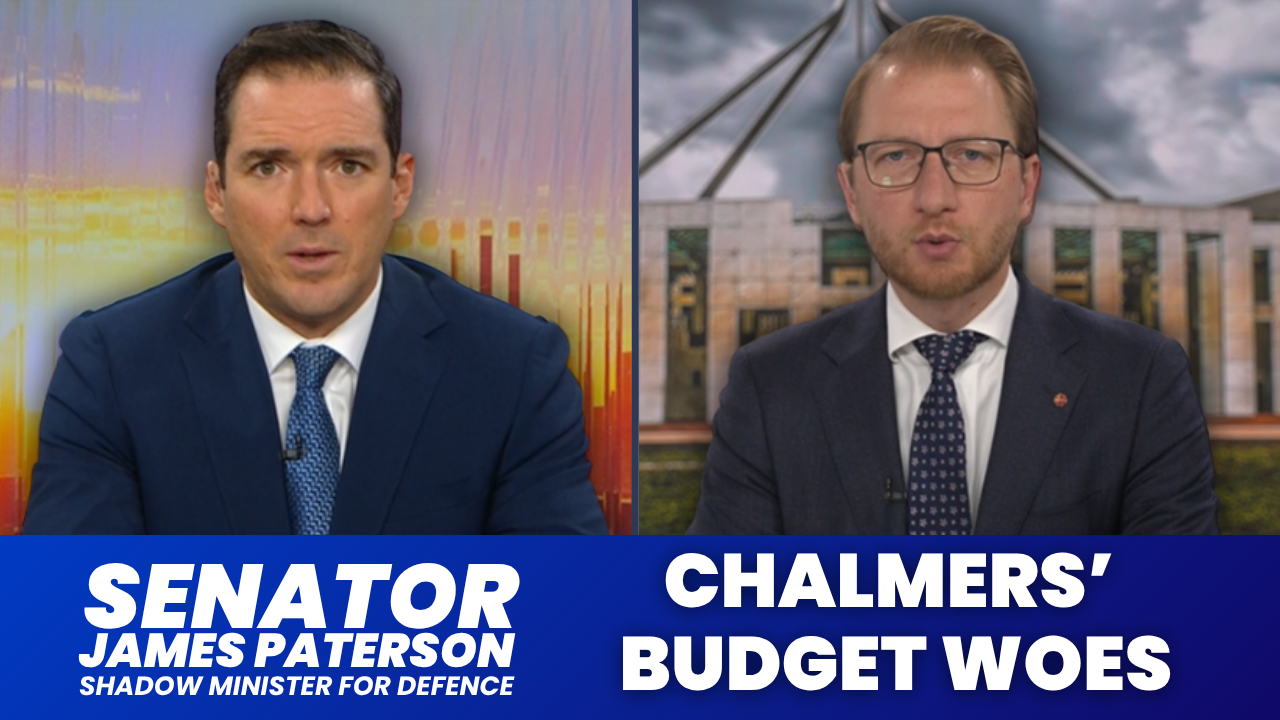
PETER STEFANOVIC: Alright, let's bring in the Shadow Defence Minister, James Paterson, for his thoughts on this. So these voluntary measures that Chris Bowen was talking about, how do you feel about it, James? Work from home, public transport, even fuel rationing, even though the government says it's not part of the plan yet?
SENATOR JAMES PATERSON: Well, I really hope we don't get to that, Pete, but there is a risk that we will get to that because this government has been incredibly flat-footed in their response to this crisis. When we first started asking questions about this in the parliament two weeks ago, the response from the government, I kid you not, was this was "right-wing extremist scaremongering” and “misinformation". They have been gaslighting the Australian people for two weeks saying there's no problem with supply, and now apparently it's not a supply issue, it's a distribution issue. Well, if you turn up to your local servo and there's no petrol or diesel, I think that's a supply issue, and if the government is right when they say we have more petrol and diesel in our country than we ever have had before, then why isn't it getting to where it needs to go? That's their responsibility, and they need to fix it.
PETER STEFANOVIC: I think that's a reasonable question, and you know we were asking that as well last week. You know, if it is a distribution problem, then just get it on trucks and get it out to those areas that need it, and as it turns out, a week on, they still don't have it.
SENATOR JAMES PATERSON: That's right, Pete. And let's not forget that the Energy Minister has extraordinary powers in this area. They were passed by the previous government when Angus Taylor was Energy Minister. It's called the Fuel Security Act. It gives them visibility of the supply and demand issues across the economy and great authority to lean on energy companies, fuel companies, distributors, wholesalers, intermediaries to make sure that supply gets to where it needs to go. So if Chris Bowen is not rolling up his sleeves and getting onto that task, it must be because he has other priorities and is distracted. And we do know that last week, his priority, instead of attending the first National Cabinet on this fuel crisis, was attending a climate conference instead, which I think speaks volumes about this government's focus.
PETER STEFANOVIC: Well, he said yesterday, and he was making the point, that yes, there have been six ships that have had to cancel their orders, but they have found three others to be able to backfill. I mean, is that good enough? Does that feed into their argument that we've got enough here, we're doing enough to get supply here, it is still distribution that remains the same? Although there is a problem emerging in a few weeks' time when those ships that are affected by not getting through the Strait of Hormuz can't come here.
SENATOR JAMES PATERSON: This is the problem, Pete. There's a big lag time between ships that are already on the water on their way to Australia and the crude which is ultimately extracted in the Middle East and then refined in Asia before it's sent to us. And so if they have already been six ships canceled out of the 80-odd that were on their way to Australia in the next couple of weeks, that's from supply that was extracted from the ground weeks, if not months ago, in the Middle East. And so it will take time before that failure to get crude out of the Strait of Hormuz into Asia is actually felt in the refineries, and that's when the problem will come, so I'm very worried that there have been cancellations already.
PETER STEFANOVIC: So what do you think the national response should be? Because the states are crying out for one.
SENATOR JAMES PATERSON: Well, I think that's very interesting to watch. I mean, you've got a Premier in Victoria, Jacinta Allan, for example, who is openly saying that any measures have to be coordinated nationally, while the federal government has been trying to push responsibility down onto the states. I think national coordination and national leadership are key. But in order to have that, you have to have a government that recognises the seriousness of the crisis, that is willing to act and that prioritises this over everything else. And frankly, when people can't fill up, when farmers can't get fuel to plant their crop, then nothing should be more important than that. I'm flabbergasted, frankly, that Chris Bowen isn't devoting every second of every waking hour to this challenge.
PETER STEFANOVIC: Do you think the states should be leaning into free public transport?
SENATOR JAMES PATERSON: Look, that's a matter for state governments. I'm not going to dictate to them how they spend money. The federal government has its own levers available if it wants to alleviate the financial pressure that families are facing right now.
PETER STEFANOVIC: Would you be against any mandates? I mean, there is obviously a COVID hangover, and the public doesn't have a whole lot of trust in government anymore. So if they were to mandate changes, i.e. fuel rationing down the track, would you be opposed to that?
SENATOR JAMES PATERSON: Well, I really, really hope we don't get to that, and I hope the federal government is doing everything they can so that that is not necessary. That would be a terrible thing that would have a devastating impact on our economy.
PETER STEFANOVIC: So, I mean, and we're already looking at a devastating impact if fuel is to get to $4 a litre, which seems to be getting likely by the day. Do you fear that that could drive headline inflation to 6% or even 7%?
SENATOR JAMES PATERSON: The problem here, Pete, is that Australia entered this crisis in the worst position of any advanced major economy because our inflation was already the highest among G7 countries, and it was rising. That had nothing to do with the Iran crisis and everything to do with the Albanese government's spending policies, which have been out of control, 40-Year high outside the pandemic as a proportion of the economy. And so when inflation is high and rising, and then you get an international shock like this on top of it, it means Australians are really paying for the weakness and indecision of the Albanian government and, in particular, Jim Chalmers. I mean, he's probably going to cut some spending in the budget in May, but that is going to be months, if not years, after he should have taken that action because he has put inflation back on the up again through his budgets.
PETER STEFANOVIC: We'll have to leave it there. James Paterson, thanks as always. We'll talk to you soon.
ENDS