

Media
|
Transcripts
July 9, 2026
E&OE…………………………………………………………………………………………
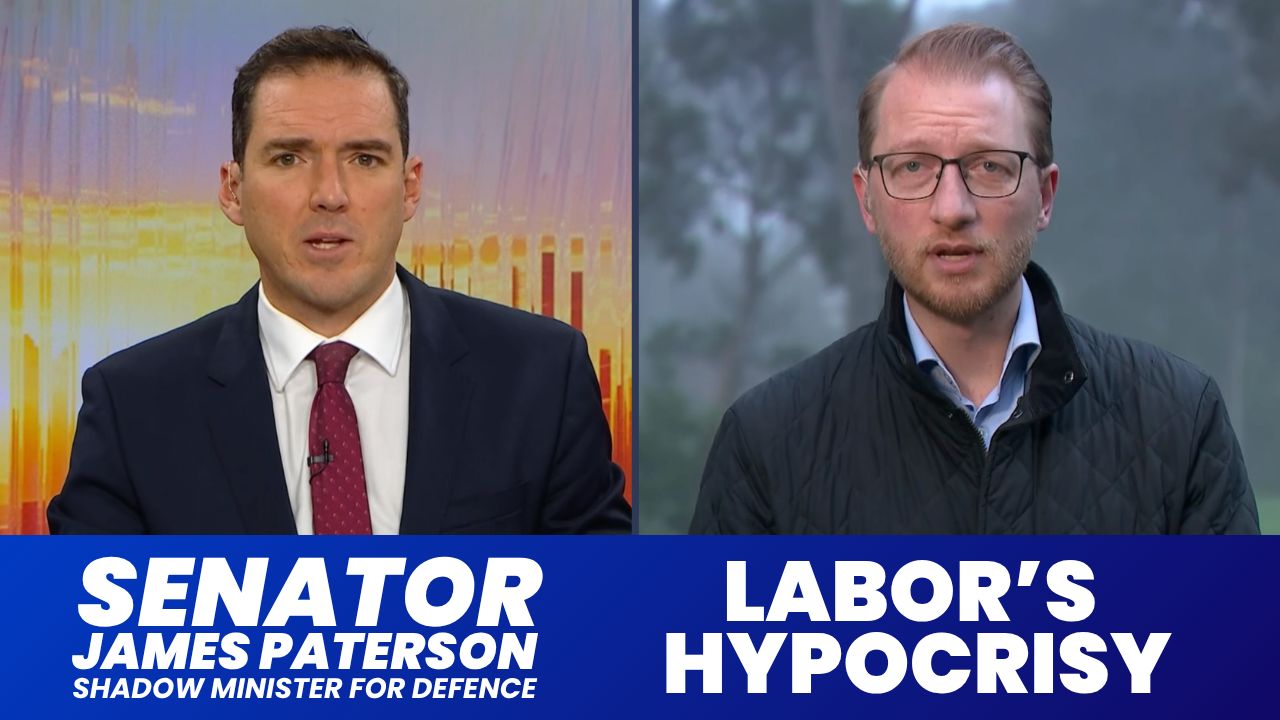
PETE STEFANOVIC: Let's start there with the Shadow Defence Minister James Paterson this morning. So yeah, let's start with the new data out today James shows median rents up about 6% over the past 12 months. Now much of that as Kaiser explained was before the budget but not all. So does this show the forecast of a $2 weekly rise to rents was a fanciful prediction?
SENATOR JAMES PATERSON: Yes, that was always a completely farcical prediction and it's going to be young Australians and aspiring first home buyers who are going to pay the price. Because of course if you're not yet a homeowner, if you aspire to buying a home, typically you're a renter and these renters are now going to paying more on their rent which will make it harder for them to save a deposit to get ready to buy a home. This is just yet more evidence that Labor's tax changes were completely ill-advised, will have serious unintended consequences and won't even achieve their own stated objective of improving housing affordability for young Australians.
PETE STEFANOVIC: Now to the Telstra outage yesterday, James. How do you think it was handled by the telco?
SENATOR JAMES PATERSON: Well, look, let's wait and see. I'm looking forward to a full explanation from Telstra about exactly why and how this outage occurred. But what we've learnt, I think, is very disturbing about our telecommunications network. It is nowhere near as resilient as it needs to be. And other systems that rely on it don't have the redundancies that they need to have. It is absurd and ridiculous that if one telco goes down, that our trains stop, that they don't have any redundancy to allow them to continue to operate. I think there are very real questions for the federal government to answer here because of course this is not the first telco that's gone down, this is the second one. And if Optus has gone down and Telstra has gone down, well maybe there's something wrong with our public policy settings.
PETE STEFANOVIC: I mean good work for getting over that noise James, what is that happening around you?
SENATOR JAMES PATERSON: We've got a building site here next to me, which we didn't realise before we got here.
PETE STEFANOVIC: That's OK, yeah. Well, good on you for ploughing on and we will have to plough on. I mean, it was a broken data clock that caused the whole outage and not much of a backup system in place. It seems like, you know, such a minor thing that could cause something so major and kind of flummoxed as to why there wasn't backup plans in place?
SENATOR JAMES PATERSON: Well, I am too, particularly because telcos like Telstra are subject to our security of critical infrastructure regulations. They're systemically important providers to the economy, not just to their own customers and their shareholders, but to the whole economy. And that imposes obligations on them to have effectively a plan B in place, to have redundancies in place so that the economy can continue moving even if they're under, you know, if they are experiencing a failure. Now of course, that legislation was passed primarily to deal with the risk of cyber threats. Now just imagine how much more serious this would be if it was a sophisticated criminal group or even a nation-state actor who took out a component of our telco network and I think we've learnt they're not up to scratch.
PETE STEFANOVIC: Yeah, well, Barnaby Joyce leaned into this yesterday, pointing the finger at China before Telstra had said anything. Was that irresponsible of him?
SENATOR JAMES PATERSON: Well, there's no evidence that I've seen that this is cyber related. I think we should be aware of the risks to these networks from cyber attacks. I think it's important when incidents like this happen that we wait for the facts to emerge, that we allow the experts like the Australian Signals Directorate and the Cyber Security Centre to make their expert judgments about whether this is cyber related or whether it's just a technical fault as it appears to have been in this case.
PETE STEFANOVIC: Your Liberal colleague Sarah Henderson called triple zero yesterday, James, to test it but without an emergency. That's an offence. Did the Senator break the law in your view?
SENATOR JAMES PATERSON: This is an absolutely desperate attempt from the Government to try and distract from their own failures. Sarah is the Shadow Minister for Communications. She's not the Minister responsible. That's Anika Wells. And I'd be sensitive too if I knew that Anika Wells is managing a crisis, given her past handling of these issues and her past evidence of poor judgement. But this is a total furphy, a total distraction. Sarah wanted to be informed about the state of the network before she did media interviews. I understand why she did what she did. It's certainly not an offence and if the Government was serious, they would have to put up or shut up here.
PETE STEFANOVIC: OK, but why would that be different to somebody else, though? Because according to the legislation, improper emergency calls carry penalties of up to three years in prison or a $75,000 fine. So, I mean, that could happen to anybody else who made a hoax call or a fake call. Why shouldn't that be applied to all people?
SENATOR JAMES PATERSON: Pete, do you seriously think the Australian Federal Police are going to go and arrest Sarah Henderson? Like, I mean, this is just a silly diversionary discussion. The substance of the issue here is we've got a government that's failed yet again. They failed in Optus, they're failing in Telstra and Australians are paying the price. There were Australians who tried to dial triple zero yesterday who weren't able to get through. I hope no one was harmed or hurt as a result of that and the government is responsible for that. We've had an entire Senate inquiry into triple zero. What has the government done to strengthen our system to make it more resilient to stop this from happening? Clearly whatever they've done it's not enough.
PETE STEFANOVIC: Okay, a few quick ones before we go. Narendra Modi has arrived in town, James. What are you hoping this leads to between our two nations?
SENATOR JAMES PATERSON: India is an incredibly important bilateral partner for Australia, it's an important economic partner, it is an increasingly important security partner as well and we obviously have really deep people-to-people links with India which is a fellow democracy. I've read some reports in the media today that we are going to finally overcome the stumbling blocks that have prevented the significant export of uranium from Australia to India. That's an enormously positive development if that's true. It is of course very important that we help India with their energy security. But it's also a great export opportunity for Australia. I of course see the irony of a Labor government that's now comfortable exporting Australian uranium for other countries to use but just not comfortable with our country using it.
PETE STEFANOVIC: Yeah, OK, and just a final one here on Iran. It feels like we're creeping back to war, James. I'd like your thoughts on it. And just while we've been speaking, there's been a post by the US President Donald Trump. It's on truth. We'll try and bring it up. So open source Intel has published a picture of what appears to be an attack in Iran. There are flames, there's smoke everywhere. And the President says this is in retribution for yesterday's bombing of ships by Iran. If it happens again, it will get much worse. I wonder if there's an off-ramp there, but do you feel like we're creeping back to war or is it a bit of an ongoing negotiation?
SENATOR JAMES PATERSON: Pete, I've been deliberately cautious all the way through this conflict and particularly during the ceasefire negotiations of not being too happy or too sad for every single development that happens. I don't think we're back in full conflict and I don't think we are moments away from peace either. I think this is a complicated, messy negotiation and the President is trying to use the leverage he has to force Iran to accept a reasonable settlement that ensures that things like the Strait of Hormuz are open and shipping is no longer threatened as it passes through that strait. That's a critically important objective which Australia shares and we hope these negotiations are successful and that we can have a durable and lasting ceasefire.
PETE STEFANOVIC: Okay, that's the Shadow Defence Minister, James Paterson, battling above the noise nearby, but doing a good job. James Paterson, thank you so much.
ENDS